
Hay una idea en marcha que me parece técnicamente muy sólida: constelaciones de satélites con cadencia suficientemente alta como para hacer seguimiento continuo del estado de la vegetación a escala de parcela. No hablo de Sentinel o Landsat, con revisitas de varios días o semanas, sino de arquitecturas que permiten observar el mismo punto con una cadencia mucho mayor. Cuando eso se cruza con gestión ganadera y agricultura el caso de uso se vuelve muy concreto.
Category Archives: news
Olvida OSM y sus estimaciones de AGL procedural! 3D con AGL real: footprints de Overture Maps y elevación LiDAR del CNIG
Trabajo desde hace años en aplicaciones que combinan datos abiertos de distinta procedencia para resolver un problema que parece sencillo y no lo es tanto: representar el modelo 3D de cualquier municipio español, con una altura que no sea un promedio inventado o procedural ni un valor por defecto según el número de plantas catastrales, sino una medición real extraída de la nube de puntos LiDAR del Plan Nacional de Ortofotografía Aérea.
SAM en ArcGIS Pro: probando la segmentación semi-automática sobre ortofotos PNOA en formato COG
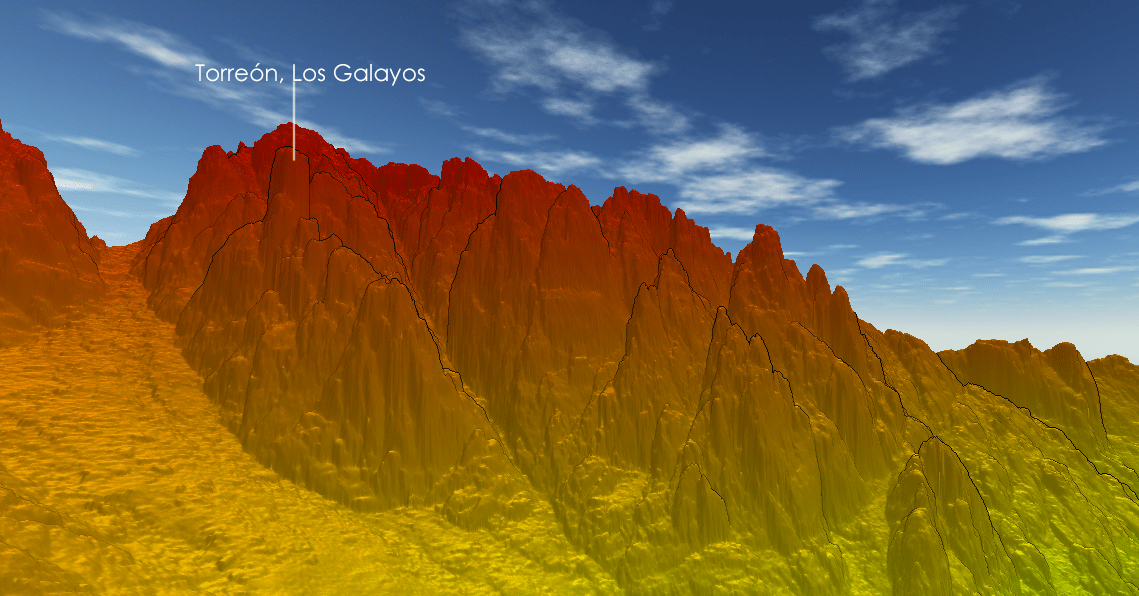
Desde hace unas semanas he estado probando el modelo Segment Anything Model (SAM) de Meta AI integrado como modelo preentrenado dentro de ArcGIS Pro, aplicándolo sobre ortofotos del Plan Nacional de Ortofotografía Aérea (PNOA) descargadas del Centro de Descargas del CNIG en formato COG. Este artículo recoge el proceso completo: qué es SAM, qué licencias y extensiones necesitas, cómo se instalan las librerías, de dónde salen los datos de origen, qué formatos intervienen y los problemas reales que me he ido encontrando por el camino, con sus soluciones.
Geografía financiera de Castilla y León · análisis espacial de POIs Open Data 2026
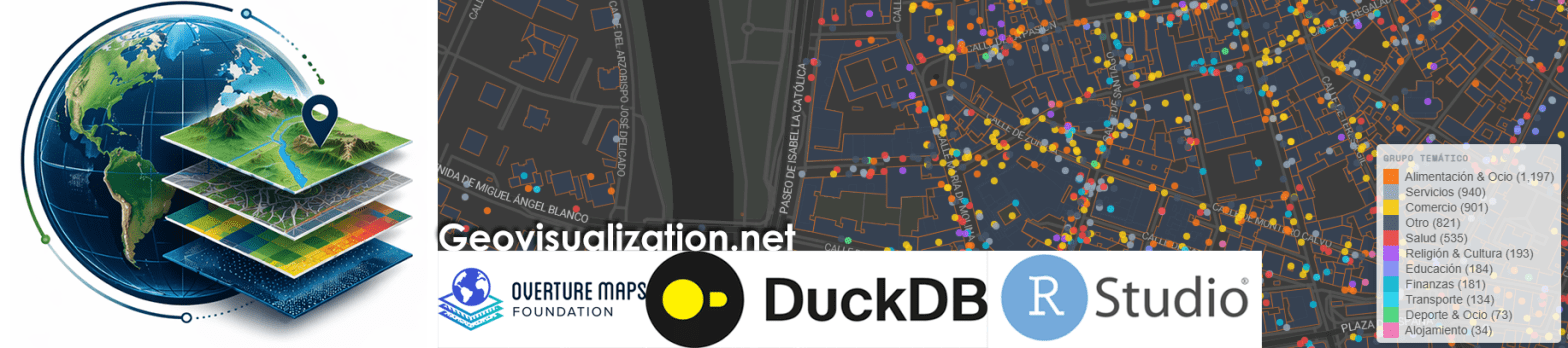
El análisis de la distribución espacial de servicios financieros en centros urbanos —bancos, cajeros, aseguradoras, gestorías y corredurías de seguros— ofrece una lectura directa de la vitalidad económica y la accesibilidad financiera de un territorio. Mapear estos puntos con assetIQ sobre datos Overture Maps permite identificar en minutos dónde se concentra la actividad financiera, qué zonas quedan en la periferia del servicio y cómo se estructuran los ejes comerciales de cada ciudad. El mismo análisis es replicable para cualquier otra capa temática —alojamiento, salud, restauración, deporte— convirtiendo cada capital de provincia en un dashboard geoespacial comparable y reproducible.
El kernel que sigue al fuego: reconstruyendo el pulso de un fuego con datos satelitales
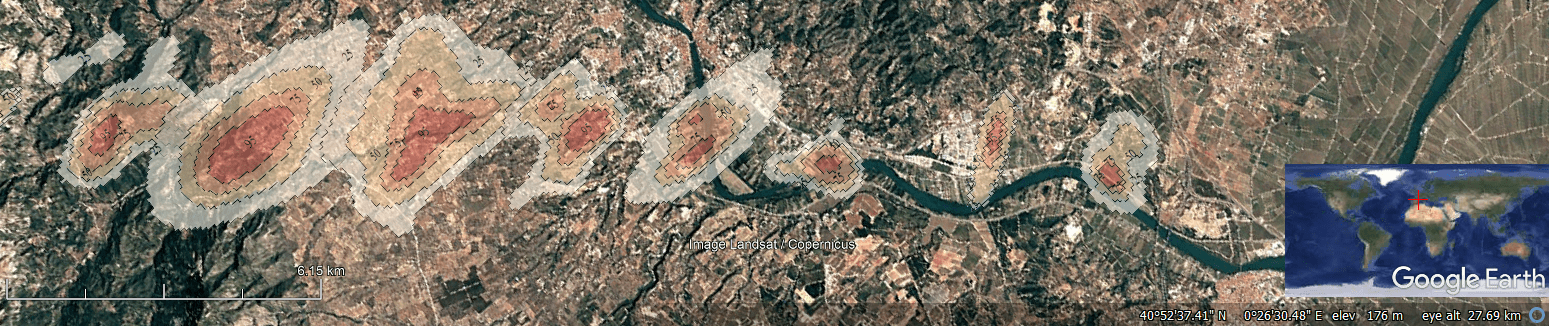
He pasado los últimos días construyendo Fire Kernel Tracker, una app en R Shiny que representa el ciclo de vida completo de un incendio forestal: desde el primer foco hasta la extinción, usando un kernel de densidad espacio-temporal ponderado por FRP (Fire Radiative Power) sobre detecciones satelitales VIIRS/MODIS de NASA FIRMS.
Super-resolution 1m vs ‘Google Maps de Incendios Forestales’ en Guadalajara, España 20260723
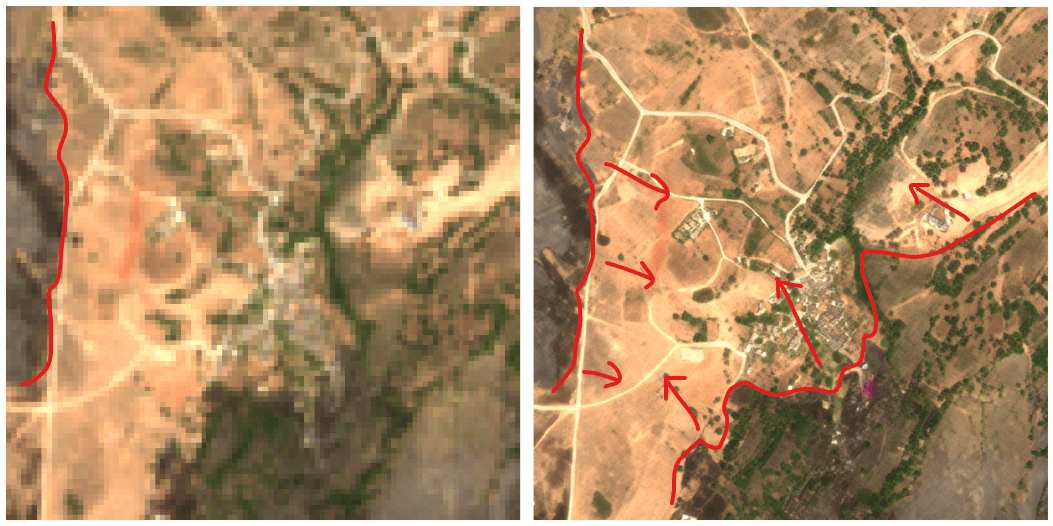
Parece que ya estamos llegando al final de este incendio pero se ha “comido” casi 32,000 ha! y me llamó la atención cómo lo tienen que haber pasado los habitantes de este pequeño pueblo de la zona llamado Las Navas de Jadraque que según Google Maps, se quemó enteramente… el fuego de la Sierra Norte de Guadalajara es exactamente ese tipo de incendio “mega” (más de 30.000 ha, nivel 2, decenas de pueblos evacuados) donde la cobertura mediática y las capas de datos rápidos tienden a generalizar y “tragarse” núcleos de población que en realidad sobrevivieron, sobre todo cuando hay defensa activa in situ.
De NDVI a CO2e: un pipeline MRV de estimación de emisiones FLAG con GEE
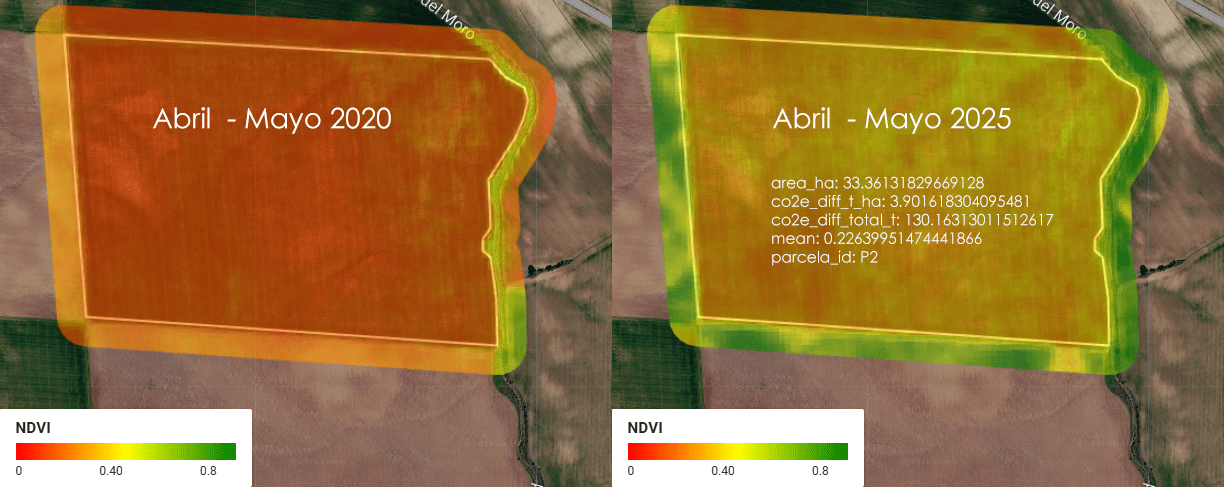
Imagina una empresa que se llama ACME. ACME es dueña de 5 parcelas de tierra en Almendralejo, Extremadura, España, donde se cultiva cereal (trigo, cebada, ese tipo de cosas). Entre las 5 parcelas, ACME tiene un total de 1.52 km² de tierra — para que te hagas una idea, eso es más o menos el tamaño de 300 campos de fútbol (a rzón de aproximadamente media hectárea por cada campo).
Start · Engage · Match. Un simulador de compatibilidad social en un bar de verdad (sin decirse ni una palabra)
Start Engage Match es un simulador interactivo, autocontenido en un único archivo HTML/JavaScript, que modela cómo un grupo de personas con gustos, orientaciones y niveles de paciencia distintos se cruza en el espacio físico de un bar y, en determinadas condiciones, genera afinidad y —ocasionalmente— una conexión completa («match»).
A lo largo de este documento, la aplicación y el local que representa comparten un único nombre: Start · Engage · Match, que además describe con precisión sus tres fases —se pulsa Empezar, se produce el Engage al cruzarse dos personas, y algunas veces surge el Match—.
El sistema combina cuatro capas de simulación que se ejecutan en tiempo real sobre un lienzo (canvas) de 20×20 metros: un modelo espacial del local (barra, pista de baile, zonas de sofás), un modelo de comportamiento individual (movimiento hacia puntos de interés, paciencia, abandono), un modelo de interacción social (el «engage» o encuentro, con una capa de compatibilidad y una capa de atracción física aleatoria) y un modelo temporal y económico que reproduce el ciclo de una noche real de bar, de 17:00 a 05:00.
El resultado se expresa como una animación en vivo, un panel de estadísticas con métricas de negocio (ingresos, coste por match) y un registro narrativo de los encuentros completos, generado automáticamente.
KALMAN RADAR TRACKER: SEGUIMIENTO DE BLANCOS AÉREOS
Cuando alguien me pregunta sobre radar, pienso sobre todo en radares montados en satélites (sesgo geospacial) pero en realidad hay mucho más, hoy voy a hablaros de de radares aeroportados, de filtros de Kalman y seguimiento de blancos aéreos en movimiento… ¡Qué interesante!
Lo primero que pienso no es en el radar en sí, sino en el problema que resuelve, porque ese problema lo llevo resolviendo de otra forma desde hace años sin llamarlo por su nombre técnico. Un radar mide la posición de un avión con ruido. Un GPS mide la posición de un coche con ruido. Un sensor SAR mide el desplazamiento del terreno con ruido. En los tres casos hay una señal real escondida detrás de mediciones que saltan, que tiemblan, que nunca coinciden exactamente con la trayectoria verdadera. Y en los tres casos la respuesta es la misma matemática: combinar lo que predice el modelo físico con lo que dice el sensor, ponderando cada fuente según cuánto te fías de ella.
VENEZUELA EARTHQUAKE RESPONSE using DuckDB, Overture Maps and R
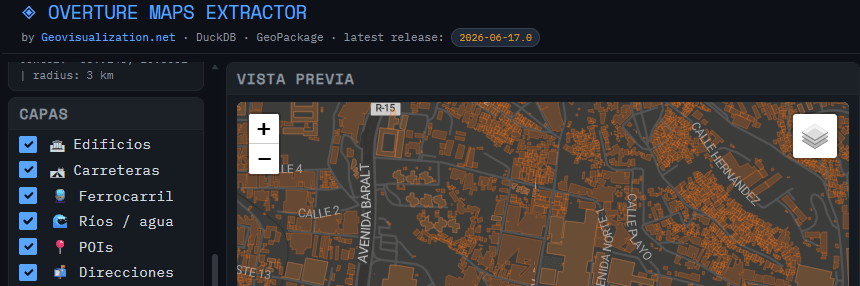
Just wanted to update on the usage of the tool I developed (OVERTURE MAPS EXTRACTOR) for extraction of Open data from Overture Maps for a quick hands on.

