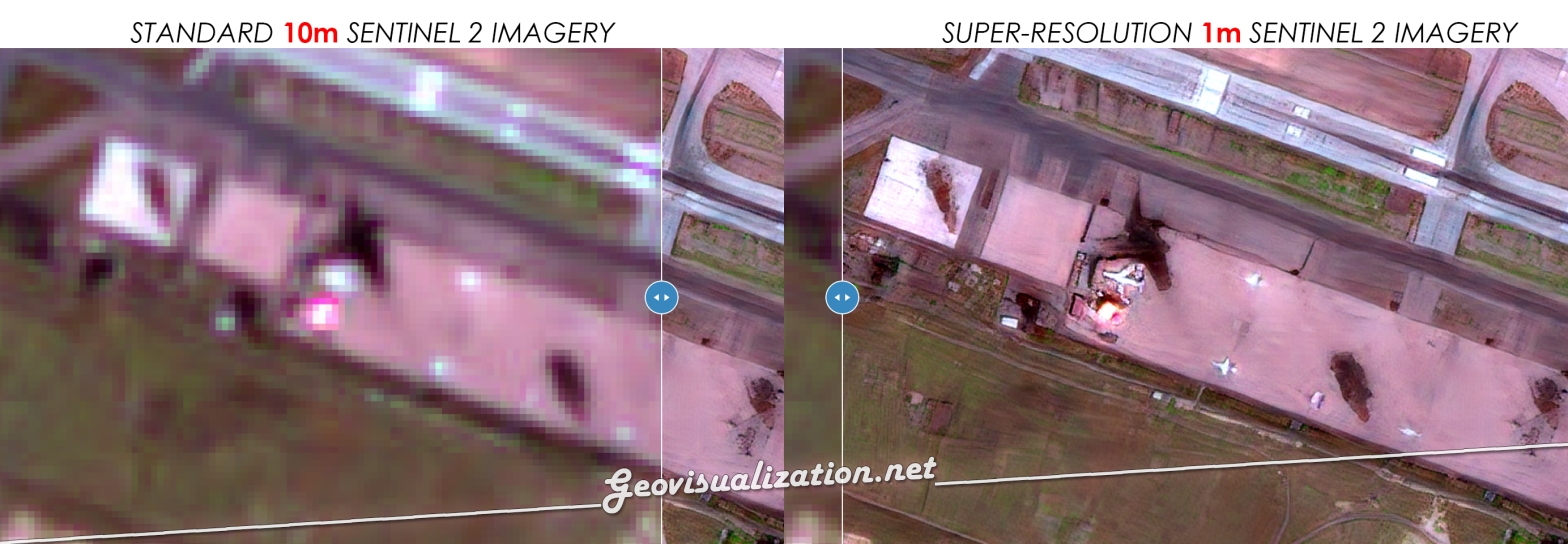
A private company, operating under a US federal license, was effectively told by the Trump administration to go dark over an active war zone. Planet complied. Vantor and BlackSky — both heavily dependent on US defense revenue — said they hadn’t even received such a request, because they were already tightly controlling access. The selective pressure lands precisely on the most open, most commercially accessible provider. That is not a coincidence.A private company, operating under a US federal license, was effectively told by the Trump administration to go dark over an active war zone. Planet complied. Vantor and BlackSky — both heavily dependent on US defense revenue — said they hadn’t even received such a request, because they were already tightly controlling access. The selective pressure lands precisely on the most open, most commercially accessible provider. That is not a coincidence.
Monthly Archives: April 2026
From Overture Maps to GPKG in minutes: Building a Geospatial Data Extractor with R and DuckDB

Modern geospatial workflows increasingly depend on fast, reliable access to city-scale vector data — building footprints, road networks, land use polygons, points of interest, address databases. Whether you are designing a 5G radio network, modelling urban heat islands, planning last-mile logistics, or simulating emergency response coverage, you almost always start from the same question: “How do I get clean, structured geodata for this city, right now, without spending two days on it?”
The Overture Maps Extractor is my answer to that question. It is a Shiny application written in R that lets any GIS professional extract multiple thematic layers from the Overture Maps Foundation dataset — for any city in the world — in a matter of minutes, with zero command-line interaction and zero manual data wrangling.
Latest projects developed by Alberto C. by 20260707
2026 GIS/VECTOR EXTRACTION+ACTUAL HEIGHTS/R/ – Olvida OSM y sus estimaciones de AGL procedural! 3D con AGL real: footprints de Overture Maps y elevación LiDAR del CNIGhttps://geovisualization.net/2026/08/10/olvida-osm-y-sus-estimaciones-de-agl-procedural-3d-con-agl-real-footprints-de-overture-maps-y-elevacion-lidar-del-cnig/41,000 LinkedIn impressions 20260810 EO/HIGH RESOLUTION NRT 15m TERRAIN EXTRACTION FROM RADAR/R – Topografía desde el espacio: flujo completo de InSAR para generar un DTM con Sentinel-1https://geovisualization.net/2026/08/06/topografia-desde-el-espacio-flujo-completo-de-insar-para-generar-un-dtm-con-sentinel-1/ GIS/SEGMENTATION/ArcGIS Pro – SAMContinue reading “Latest projects developed by Alberto C. by 20260707”
2066 followers in LinkedIn is something (updated 20260804)
Una red con nombre y apellidos. A veces, las métricas de las redes sociales nos hacen olvidar que detrás de cada clic hay una persona. Ver este camino de 1531 profesionales a vista de helicóptero no es un ejercicio de ego, sino de gratitud.
AERIAL SURVEYOR SIMULATOR: Reimagining Aerial Photography

For three years, my office was thousands of feet in the air. As an aerial photographer, I spent my days capturing the world’s textures, layouts, and topographies from a cockpit—a masterclass in perspective that I am now transforming into a Aerial Surveyor Simulator.
Urban development in Madrid from the mid-19th century to the present day

All existing buildings in Madrid currently listed in the Land Registry database have their year of construction recorded. This map shows, by decade, where the bulk of that urban development took place. For example, in the 1920s it was in the Salamanca district, in the 1930s in Chamartín… shifting from development in the city centre to the outskirts.
Bienvenido a Madrid Río, donde el carril único lo usa todo el mundo… pero solo la mitad lo usa bien
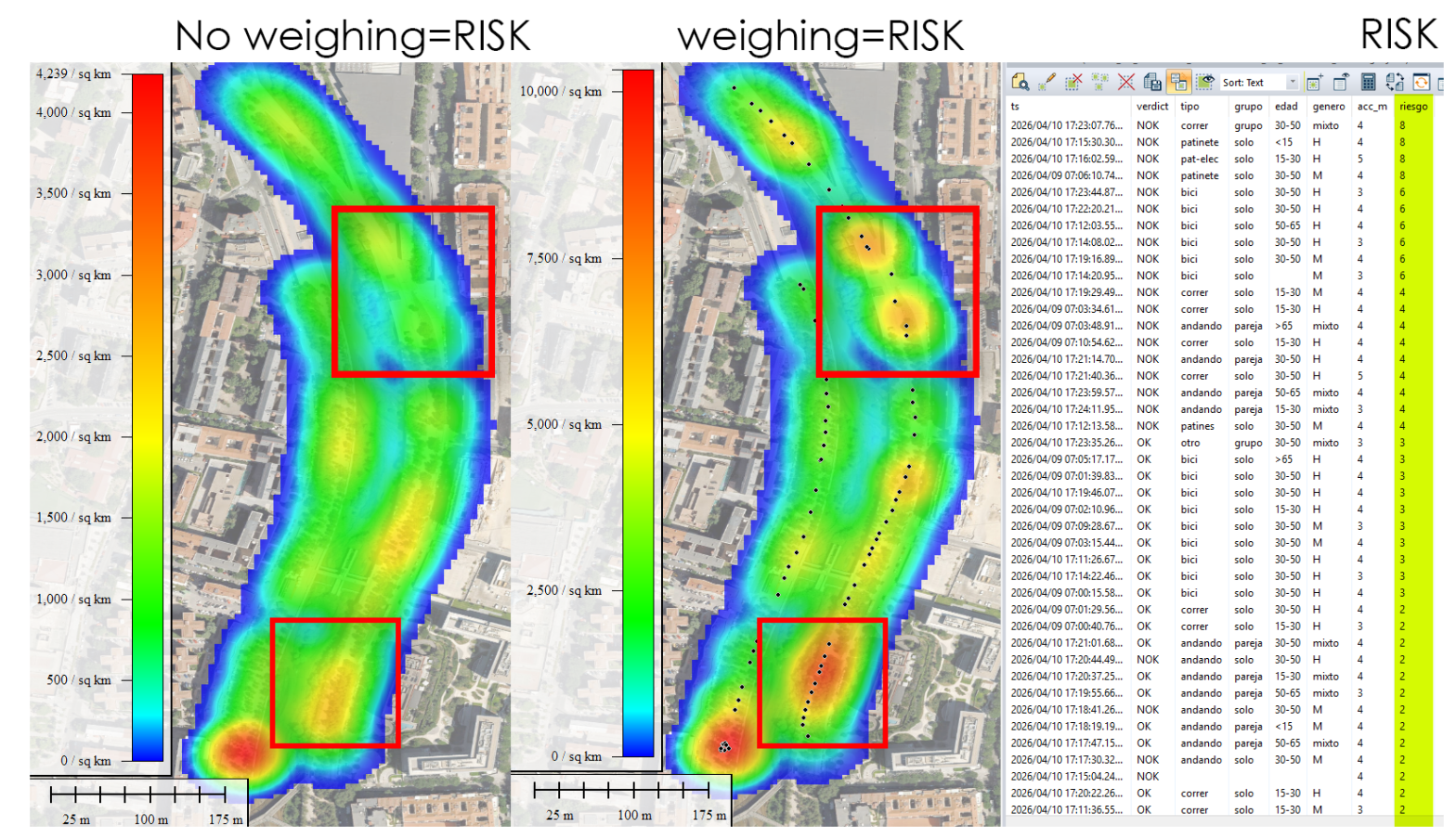
Y cuando eso ocurre, se genera un caos silencioso. Normalmente se resuelve en segundos con ese equilibrio dinámico tan mediterráneo que tenemos —un quiebro, una mirada, un gesto— pero no siempre. He visto bicis arrollar a personas que iban por su lado. Grupos andando en paralelo, bloqueando la vía entera. Patinetes a velocidad de vértigo a punto de llevarse por delante a un niño que, irónicamente, iba exactamente donde debía. Yo mismo llevo usando esta vía desde casi su inauguración, hace más de once años, y puedo decir que el problema no ha mejorado: ha crecido, a medida que el carril se ha llenado de nuevas tipologías de movilidad.
¿Qué quiero hacer? Quiero medir esto. Con rigor, con datos, y con herramientas actuales. Mi objetivo es retratar estadísticamente quién va en el sentido correcto y quién no, desagregando por tipo de movilidad, edad, género y comportamiento en grupo. ¿Son los ciclistas los que más incumplen, o los patinetes eléctricos? ¿La gente mayor es más respetuosa que los jóvenes? ¿Los grupos de tres o más personas son el mayor factor de caos? No lo sé aún. Pero lo voy a descubrir.

