Hi guys, Surfing the internet is great when you need to figure out something. I needed to validate some DTM from unknown sources against an also unknown source (but at least a kind of reliable one, Google Earth). All we need is Google Earth TCX converter ARcGIS Excel This is the procedure i have followed:Continue reading “DTM validation using Google Earth (and RMSE extraction)”
Tag Archives: 3d
Remote Sensing, Photogrammetry, Lidar and Landuse IGN Spain
A few more lines for leting you know again that i passed this other course just now in Instituto Geográfico of Spain (IGN). Remote Sensing, Photogrammetry, Lidar and Landuse, a comprehensive 40h update on relevant information i need tu use on a daily basis. This ‘update’ helps me to better understand what i am working with andContinue reading “Remote Sensing, Photogrammetry, Lidar and Landuse IGN Spain”
Advanced Thematic Cartography IGN Spain
A few lines for leting you know i passed this course last year 2013 in Instituto Geográfico of Spain (IGN). Spatial analysis, Spatial stats, proper simbolization, data mining and geovisualization. A very interesting 40h online course that helps me on a daily basis to be able to show geodata in a more professional way. BecauseContinue reading “Advanced Thematic Cartography IGN Spain”
HTML High resolution DTM visualization using QGIS
This QGIS Plugin, Qgis2threejs, exports terrain data, map canvas image and vector data to your web browser!! All you have to do is opening the DTM in QGIS (2.4.0 Chugiak), go to plugins library and install Qgis2threejs. Once its installed you will see this icon on screen and you will need to clic on it. ThenContinue reading “HTML High resolution DTM visualization using QGIS”
DTM from SRTM? Let’s compare sources using RMSE (Root Mean Square Error) and a gaussian kernell density map
I guess we all can make a DTM out of many sources but SRTM is one of the most common ones, right?. Then let’s learn from this very simple approach how close we are from the SRTM raw data. Selecting a not very big representative area to be able to handle it, exporting raster to polygon (fromContinue reading “DTM from SRTM? Let’s compare sources using RMSE (Root Mean Square Error) and a gaussian kernell density map”
RSME comparing LIDAR data with a third party’s 3D dataset
I would like to share with you an easy analysis i have been working in the last days. I had a vector dataset of buildings and i knew how high they were (there was a field called ‘AGL’ or Above Ground Level) and a LIDAR 2m resolution dataset over the city of London. My aimContinue reading “RSME comparing LIDAR data with a third party’s 3D dataset”
Projets éoliens en Loire-Atlantique
C’est vraiment magnifique l’ouverture des données publiques… Je vais décrire mon itinéraire pour mieux comprendre: Télécharger des données (Projets éoliens en Loire-Atlantique) Telecharger DTM (SRTM v4) Faire Carte d’ombrage (ArcGIS), Orientations (ArcGIS) et Inclinations (ArcGIS) pour mieux comprendre l’emplacement des moulins Faire Carte de densité (en mesurent la puissance du parc) Et maintenant la carte de densité en Global Mapper…Continue reading “Projets éoliens en Loire-Atlantique”
Solar + Shadows analysis on Rue Massillon, Nantes (France)
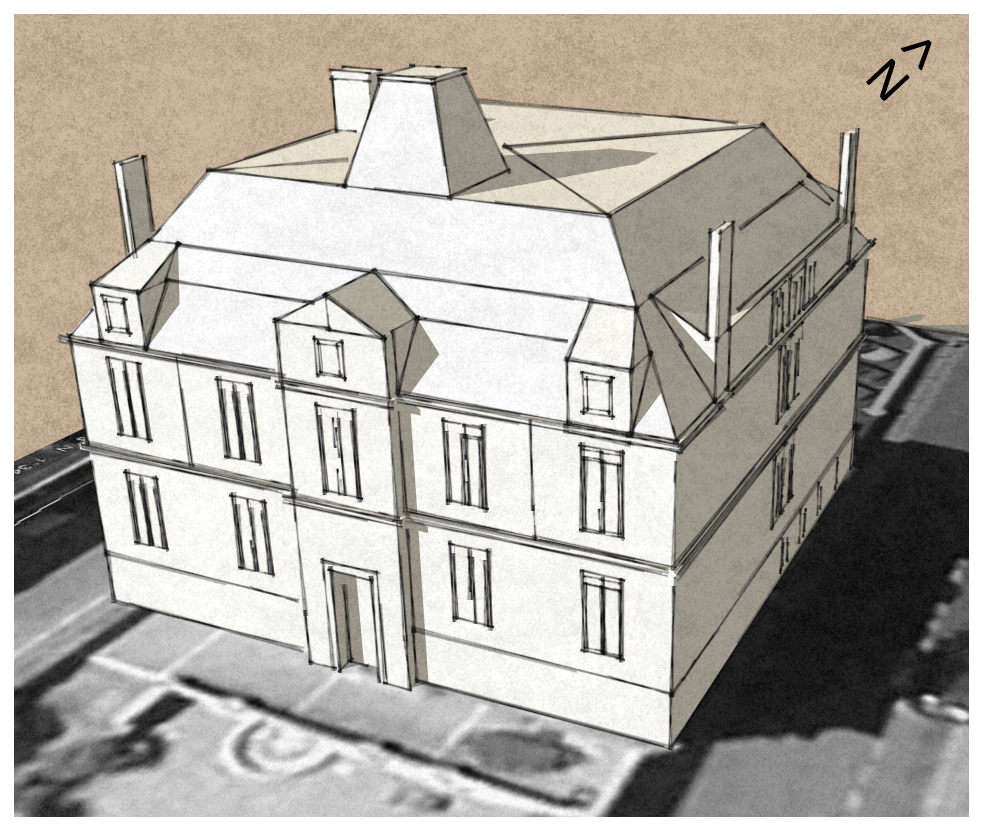
Let’s model it first using Sketchup. Also I have used a non standard style only for visualization purposes
Shadow analysis en Puerta de Arganda, Madrid.
Hoy publico en español puesto que los datos son en español y yo soy español:-) but if you guys have any doubt dont hesitate to ask… even if you are french I will be around to answer you back “en français”, quand même !!!. La idea era hacer un estudio de sombras de para mi propio usoContinue reading “Shadow analysis en Puerta de Arganda, Madrid.”
ViewTec’s State-of-the-art 3D visualization
Good news!!!! They’ve probably released this Geovisualization Engine long time ago (It used to be an ‘in-house’ software) but I have just realized. I worked with this state-of-the-art TerrainView 3D software for six months while I was working as a GIS Specialist in Cape Town (South Africa)… What does this software has that no oneContinue reading “ViewTec’s State-of-the-art 3D visualization”

