Palestine 2023-2024

The 7th of October will forever be remembered in our collective memory as a day of tragedy and senseless violence, an operation that would shatter the dream of Israel’s inviolability. The attacks by Hamas were unequivocally condemnable. The targeting of civilians (+1200 dead and +250 kidnappings) is never ever acceptable, and those responsible for such acts must be held accountable. However, the response that followed has escalated into something far worse, a state-driven campaign of violence by Israel that has, in just one year, claimed over 42,000 lives, a staggering number of whom are women and children. This is not defense; this is murder.

While I unequivocally condemn the actions of Hamas on that particular day, my opposition to the actions undertaken by Israel is significantly more severe. What we are currently observing is not a measured military response, but rather an act that can only be characterized as genocide. The extent of the destruction, the disproportionate targeting of civilian infrastructure, and the staggering number of innocent lives lost collectively illustrate a scenario of intentional annihilation.

What makes this even more terrible is the international complicity that accompanies this massacre. Israel’s allies not only justifie but finance this destruction. Billions of dollars in aid continue to flow, fueling a war machine that shows no regard for human life. This is not just an Israeli tragedy; it is a stain on the moral fabric of the world. How can we claim to uphold human rights, justice, and democracy when the world’s most powerful nations backs, supports, and legitimizes what is unfolding before their eyes?

Europa Press

Europe, a continent that once stated “Never Again” in the wake of its own genocidal past now finds itself paralyzed, divided, and weak in the face of this catastrophe. The European Union, once seen as a beacon of human rights and unity, has shown itself incapable of standing up to Israel’s actions, let alone taking meaningful steps to stop the bloodshed. We see platitudes, we hear calls for de-escalation, but where is the courage to act? Where is the unified voice condemning the slaughter of innocents?

The world is undeniably worse off since the 7th of October. Injustice, fueled by unchecked power, has deepened global divides, and we now stand on the brink of further instability. This is not simply a conflict between two parties; it has become a glaring testament to how power, when left unchecked, can obliterate entire populations with impunity.

What is happening in Palestine cannot be ignored, justified, or excused. Every life lost is a failure not just of Israel, but of the entire global community that stands idly by as this horror unfolds.

On the GIS data side (there’s always a GIS data side) please take a look at this UNOSAT Gaza Strip Comprehensive Damage Assessment – September 2024 released by UNOSAT here https://data.humdata.org/dataset/unosat-gaza-strip-comprehensive-damage-assessment-september-2024

I created a new field to summarize all damage but a one by one comparison can be accomplished if needed. There are +10 different images we could challenge to each other.

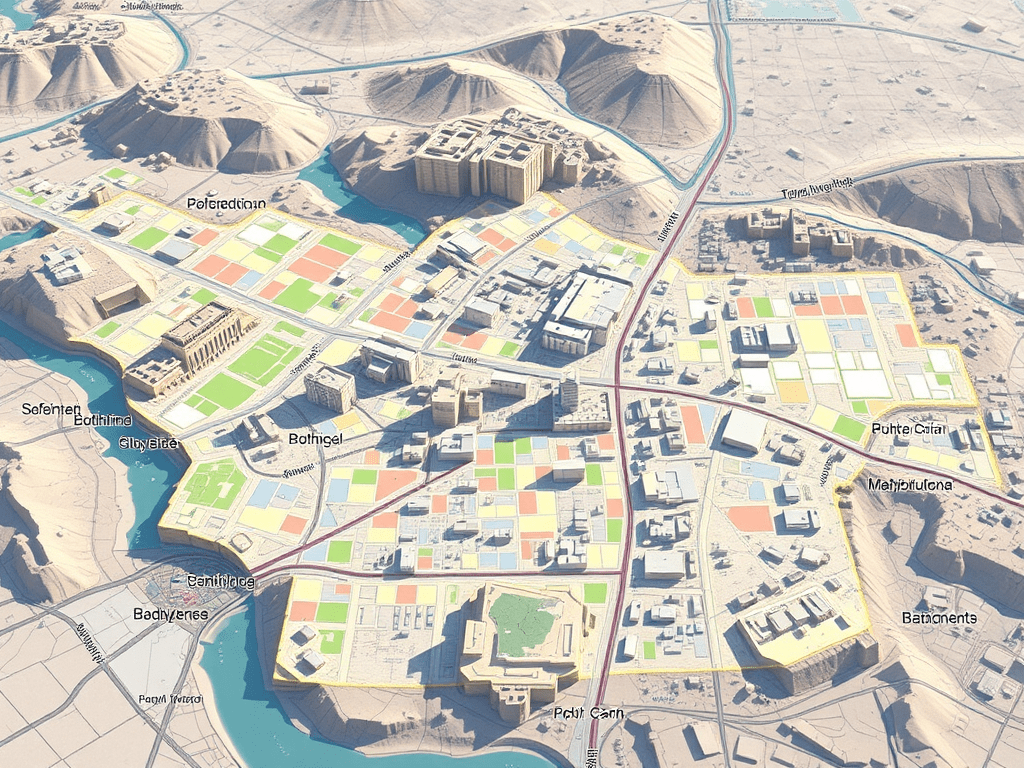
Visualization of the damage. Global Mapper
3D Visualization of the damage. Global Mapper

UNOSAT code: CE20231007PSE 
This map illustrates a satellite imagery-based comprehensive assessment of damage and destruction to structures within the area of interest in the Gaza Strip, Occupied Palestinian Territory, based on images collected on 3 and 6 September 2024 when compared to images collected on 1 May 2023, 10 May 2023, 18 September 2023, 15 October 2023, 7 November 2023, 26 November 2023, 6-7 January 2024, 29 February 2024, 31 March – 1 April 2024, 3 May 2024, and 6 July 2024. According to satellite imagery analysis, UNOSAT identified 52,564 destroyed structures, 18,913 severely damaged structures, 56,710 moderately damaged structures, and 35,591 possibly damaged structures for a total of 163,778 structures. These correspond to around 66% of the total structures in the Gaza Strip and a total of 227,591 estimated damaged housing units.

Khan Yunis. Visualization of the damage. Global Mapper.

The governorates of Khan Yunis and Rafah have experienced the highest rise in damage compared to the 6 July 2024 analysis, with around 1,470 new structures damaged in Khan Yunis and around 3,770 in Rafah. Within Rafah, Rafah City municipality had the highest number of newly damaged structures, totaling 3,289. This is a preliminary analysis and has not yet been validated in the field.

The number of civilian casualties in Gaza is alarmingly high, far exceeding those seen in most modern conflicts. Reports indicate that tens of thousands of people, many of them women and children (+16,000 children according BBC), have been killed in this short period of one year and let’s not forget the +100,000 injured and +10,000 missing, presumed under wreckage. This level of civilian suffering is unprecedented in scale and highlights the disproportionate nature of the violence. Unlike other wars where efforts are made to minimize civilian harm, the ongoing assault on Gaza appears to disregard the protection of innocent lives. The international community must confront the overwhelming human cost and demand immediate accountability for these atrocities. We can’t ask the US for anything because they are part of the problem but we could ask/beg, the rest of the international community and specifically, Europe to do something now!.

Alberto C
Senior GIS Analyst but first, persona.

https://www.eldiario.es/internacional/despues-destruccion-gaza-imagenes-satelite-muestran-secuelas-bombardeos-israelies_1_10605124.html
https://www.planet.com/stories/gaza-city-harbour-Pu66tUXIR
https://www.bellingcat.com/news/2024/08/27/satellite-imagery-shows-vast-destruction-in-rafah/
https://www.planet.com/stories/one-year-of-genocide-in-gaza-mHHHM0kHg
https://unosat.org/static/unosat_filesystem/3984/OCHA-OPT-017_UNOSAT_A3_Gaza_Strip_OPT_CDA_06092024.pdf
https://data.humdata.org/dataset/unosat-gaza-strip-comprehensive-damage-assessment-september-2024
https://news.un.org/es/story/2024/10/1533361
https://www.bbc.com/mundo/articles/c3rl7qnxlz7o

Wildfires in Russia through SENTINEL 2

Wildfire Emergencies Declared in Russia’s Far East Republics of Tyva, Sakha

In recent days, the Sakha region in Russia has experienced significant wildfire activity, More than 100 wildfires spanning more than 300,000 hectares are currently active. driven by a combination of extreme weather conditions and environmental factors. The fires, which have spread across vast areas of forest and tundra, have been exacerbated by unusually high temperatures and prolonged periods of drought. These conditions have led to exceptionally dry vegetation, creating an ideal fuel for the fires.

The wildfires in Sakha have released substantial amounts of carbon dioxide and other greenhouse gases into the atmosphere, contributing to global climate change. Satellite imagery has revealed extensive smoke plumes, which have affected air quality not only locally but also in distant regions. The fires have also disrupted local ecosystems, threatening biodiversity and the habitats of various wildlife species.

The combination of bands 12 (Short-Wave Infrared, SWIR), 11 (Short-Wave Infrared, SWIR), and 4 (Red) from Sentinel-2 imagery is commonly used for various applications, including vegetation analysis, burn scar mapping, and soil moisture monitoring. This band combination provides a unique perspective on land surface features due to the distinct reflectance properties of different materials in these spectral regions.

  1. Band 12 (SWIR – 2190 nm): This band is sensitive to water content in soil and vegetation. It is useful for distinguishing between dry and moist areas, as well as identifying burn scars, as charred vegetation absorbs more in this wavelength.
  2. Band 11 (SWIR – 1610 nm): Similar to Band 12, this band is also sensitive to water content. It helps in assessing vegetation health and detecting thermal anomalies. Its lower wavelength compared to Band 12 makes it slightly more sensitive to moisture content.
  3. Band 4 (Red – 665 nm): This band is part of the visible spectrum and is highly responsive to chlorophyll absorption in plants. It is essential for vegetation analysis, including calculating vegetation indices like NDVI (Normalized Difference Vegetation Index).

When combined, bands 12, 11, and 4 create a false-color composite that enhances the visibility of certain features. In this composite:

  • Vegetation typically appears in shades of red and orange, with healthier, denser vegetation showing more intense red.
  • Burn scars and areas with low vegetation moisture content are highlighted in dark tones, often appearing as dark brown or black.
  • Bare soil and urban areas may appear in shades of cyan or blue, depending on the moisture content and material composition.

This band combination is particularly useful for monitoring post-fire landscapes, as it clearly delineates burn scars and helps in assessing the extent of fire damage. It also assists in agricultural management by providing insights into soil and crop conditions.

The combination of bands 12 (SWIR), 8 (NIR), and 4 (Red) in Sentinel-2 imagery differs from 12-11-4 primarily in the inclusion of the Near-Infrared (NIR) band instead of the second Short-Wave Infrared (SWIR) band. This change affects the image interpretation as follows:

  • Band 8 (NIR – 842 nm): This band is highly sensitive to vegetation, as healthy vegetation reflects strongly in the NIR. It enhances the visibility of vegetation health and biomass.

In the 12-8-4 composite:

  • Vegetation appears more vibrant in shades of red due to the strong NIR reflection.
  • Burn scars and low moisture areas are still highlighted in dark tones (from Band 12).
  • The overall contrast between healthy vegetation and other land features is more pronounced compared to the 12-11-4 combination.

The technical response to the wildfires has involved the deployment of firefighting personnel and equipment, including aircraft for aerial firefighting. However, the vast and remote nature of the affected areas has posed significant logistical challenges. Firefighters have had to contend with limited accessibility and resources, making it difficult to control and extinguish the fires effectively.

Advanced technologies such as remote sensing and Geographic Information Systems (GIS) have been utilized to monitor the extent and progression of the wildfires. These tools provide real-time data, helping to coordinate firefighting efforts and assess the impact on the environment. Additionally, climate models are being used to predict future wildfire risks in the region, considering ongoing climate trends.

The situation in Sakha highlights the broader issue of increasing wildfire frequency and intensity due to climate change. It underscores the need for improved forest management practices, early warning systems, and international cooperation in addressing the challenges posed by wildfires. As the fires continue to burn, the focus remains on mitigating their impact and protecting both human communities and natural ecosystems.

Please note I UNDERSTAND WHY THEY CALL THEM WILDFIRES!!
Lat: 59.87946, Lng: 136.09365 – 2023-08-10 – SENTINEL-2 Combination 12/8/4

Hope you enjoyed the post,

Regards,

Alberto C.
GIS analyst

SOURCES:
https://www.themoscowtimes.com/2024/07/01/wildfire-emergencies-declared-in-russias-far-east-republics-of-tyva-sakha-a85571
https://report.az/en/region/wildfires-cover-almost-1-million-hectares-in-russia-s-yakutia/
https://s2gm.land.copernicus.eu/
https://earthobservatory.nasa.gov/images/19770/fires-in-southern-russia
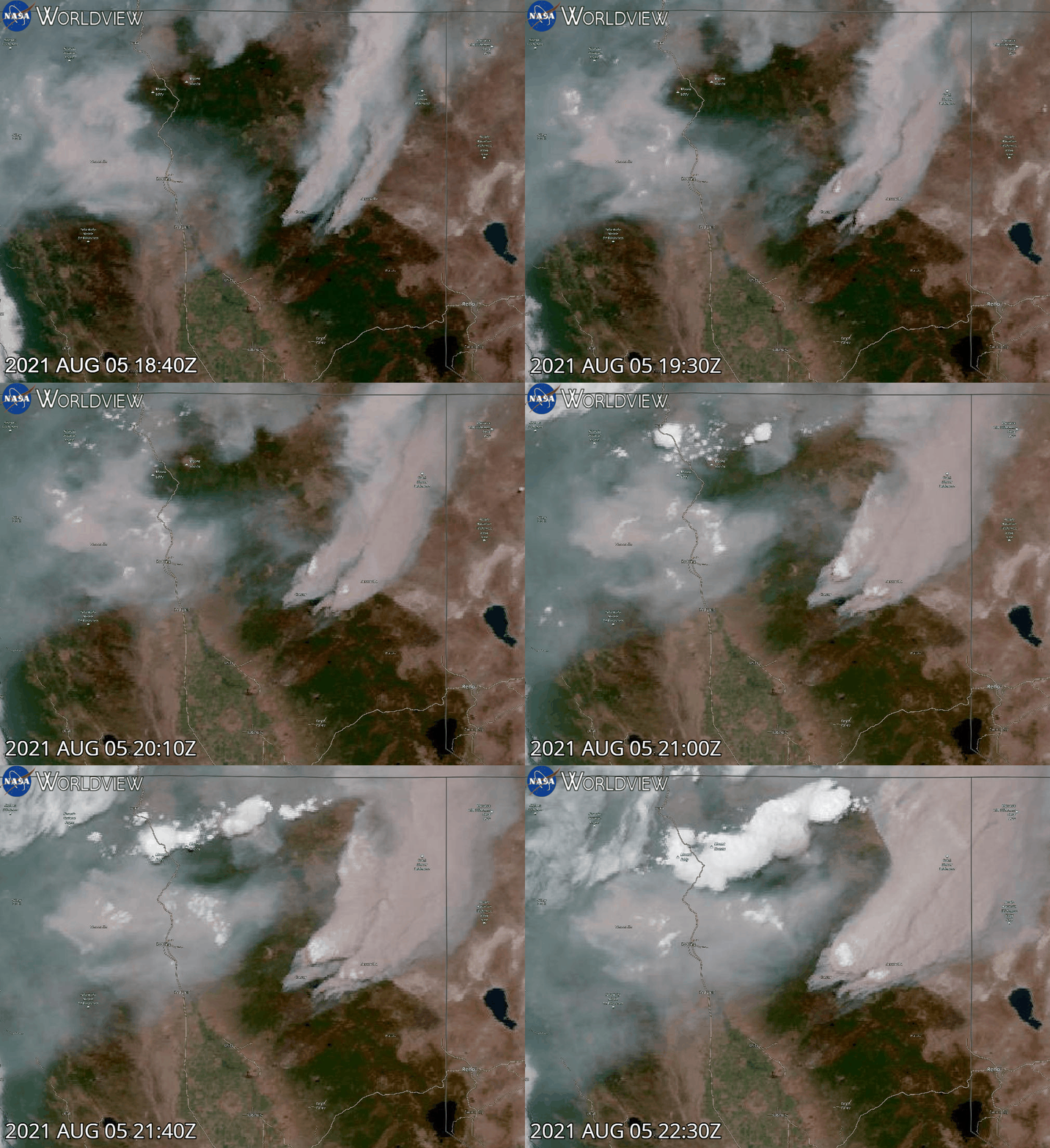
https://worldview.earthdata.nasa.gov/?v=-131.59576218628234,36.28670613252814,-110.01769405924279,46.61495853291842&z=4&ics=true&ici=5&icd=10&as=2021-08-05-T18%3A40%3A00Z&ae=2021-08-05-T22%3A30%3A00Z&l=Reference_Labels_15m,Reference_Features_15m,Coastlines_15m(hidden),MODIS_Terra_Thermal_Anomalies_Day(hidden),GOES-West_ABI_GeoColor&lg=true&tr=geostationary&al=true&av=7&ab=on


Water Quality Viewer (UWQV) for Sentinel -2

The Ulyssys Water Quality Viewer is an innovative tool designed to monitor and assess water quality using data from the Sentinel-2 satellite. Sentinel-2, part of the European Space Agency’s Copernicus program, provides high-resolution imagery crucial for environmental monitoring.

This viewer leverages advanced algorithms to analyze satellite imagery, offering real-time insights into various water quality parameters such as chlorophyll concentration, turbidity, and colored dissolved organic matter (CDOM). By processing Sentinel-2 data, the Ulyssys Water Quality Viewer can detect changes in water quality with remarkable accuracy, making it an essential tool for researchers, environmentalists, and policy makers.

Key features of the Ulyssys Water Quality Viewer include user-friendly interfaces, customizable analysis options, and detailed visualization tools. It allows users to select specific regions and timeframes, enabling targeted analysis and monitoring. Furthermore, the integration with Sentinel-2 ensures continuous and updated data, which is crucial for tracking temporal changes in water bodies.

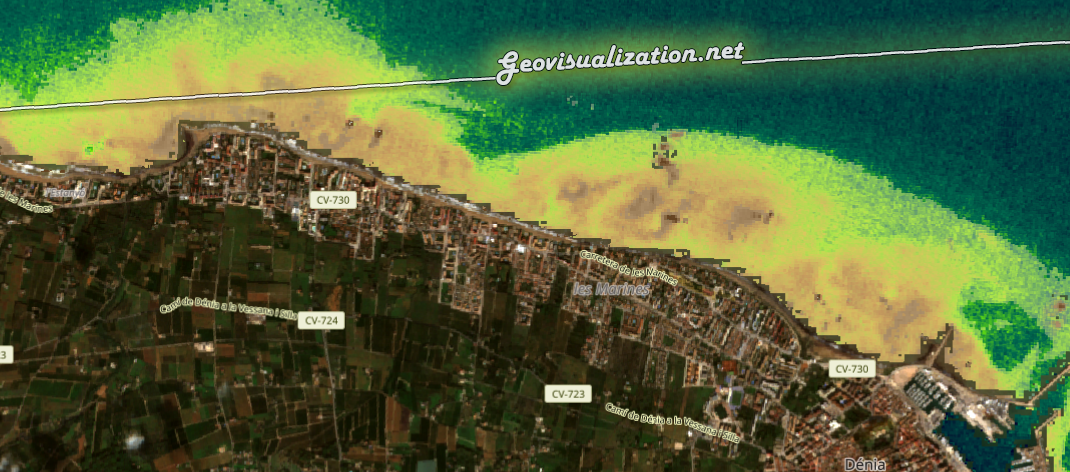
The viewer includes a detailed legend to interpret the visual data effectively. The chlorophyll content is depicted in a color gradient, ranging from dark blue to red. Dark blue indicates low chlorophyll content, progressing through green for moderate levels, and culminating in red for high chlorophyll content. This color coding allows for quick identification of areas with varying levels of phytoplankton, which is crucial for understanding the ecological health of water bodies.

Sediment concentrations are shown in shades of brown. Areas with high sediment content are represented by opaque brown, indicating turbidity and potential water quality issues. This feature is particularly useful for identifying erosion, runoff events, and other sediment-related changes in aquatic environments.

Key features of the Ulyssys Water Quality Viewer include user-friendly interfaces, customizable analysis options, and detailed visualization tools. It allows users to select specific regions and timeframes, enabling targeted analysis and monitoring. Furthermore, the integration with Sentinel-2 ensures continuous and updated data, which is crucial for tracking temporal changes in water bodies.

The importance of the Ulyssys Water Quality Viewer is particularly evident when applied to La Mata and Torrevieja salt lagoons. These unique and ecologically significant bodies of water are vital habitats for a variety of flora and fauna, including migratory birds. Monitoring water quality in these lagoons is essential for several reasons:

  1. Environmental Health: The lagoons’ health directly impacts local biodiversity. High chlorophyll levels, indicating algal blooms, can lead to oxygen depletion and harm aquatic life. Understanding chlorophyll concentrations helps manage and protect these ecosystems.
  2. Tourism and Recreation: Both lagoons are popular tourist destinations. Poor water quality can affect recreational activities and the local economy. Real-time monitoring ensures that water quality remains safe and attractive for visitors.
  3. Salt Production: Torrevieja Lagoon is renowned for its salt production. Monitoring sediment and chlorophyll levels ensures that the conditions remain optimal for salt extraction processes.
  4. Scientific Research: Continuous and accurate data from the Ulyssys Water Quality Viewer supports scientific research, providing insights into ecological changes and helping to develop conservation strategies.

In summary, the Ulyssys Water Quality Viewer harnesses the power of Sentinel-2 satellite data to provide comprehensive and accurate water quality assessments. Its intuitive legend and visualization capabilities significantly enhance the user’s ability to interpret and act on environmental data, contributing to better water management and conservation efforts worldwide, particularly in ecologically and economically significant areas like La Mata and Torrevieja salt lagoons.

https://cadenaser.com/emisora/2020/04/01/radio_cartagena/1585733206_473997.html
https://info.igme.es/ielig/LIGInfo.aspx?codigo=SB015
https://agupubs.onlinelibrary.wiley.com/doi/10.1029/2019JC015188
https://es.wikipedia.org/wiki/Parque_natural_de_las_Lagunas_de_La_Mata_y_Torrevieja

Hope you guys find it interesting.

Alberto C.
GIS analyst

CADALSO DE LOS VIDRIOS: MELANCOLÍA DE TIEMPOS MEJORES

Enclavado en un entorno rural de gran belleza natural (Latitud: 40° 18′ 3” Norte Longitud: 4° 26′ 37” Oeste) Cadalso de los Vidrios se enfrenta a una realidad económica marcada por la fragilidad y la dependencia. Con un tejido industrial prácticamente inexistente, el pueblo se sustenta principalmente en dos pilares: el ínfimo sector agrario y el sector de la construcción y los servicios. Esta dependencia económica limita las oportunidades de desarrollo y aumenta la vulnerabilidad frente a situaciones adversas, entre ellas, la explotación descontrolada de los recursos mineros y forestales.

https://commons.wikimedia.org/w/index.php?curid=68822951

El sector agrario, tradicionalmente arraigado en la región, ha sido durante décadas la principal fuente de ingresos para los habitantes de Cadalso de los Vidrios. Sin embargo, la modernización de la agricultura y los cambios en los hábitos de consumo han llevado a una disminución gradual de la rentabilidad de esta actividad. La escasez de recursos y la falta de apoyo gubernamental han dejado a muchos agricultores en una situación precaria, con dificultades para mantener sus explotaciones y competir en un mercado cada vez más globalizado.

El sector servicios y constructivo, debilitado paulatinamente desde finales de los 2000, no compensa más que colateralmente la debilidad del sector agrario. La mínima oferta turística, centrada en el fomento de actividades pseudotaurinas (en notable decadencia en casi todos sitios) y vitivinícolas, algo de turismo rural y ecoturismo, atrae entre otros a visitantes interesados entre otras cosas en disfrutar de un paseo para tomar algo, de la naturaleza y la tranquilidad del entorno, pero ese entorno se degrada y pero no genera suficientes ingresos por sí solo para dinamizar la economía local de manera significativa. Además, la cierta estacionalidad (no solo entre las estaciones, también entre los días de la semana y el fin de semana) que conlleva excesivas fluctuaciones en la actividad económica, dejando periodos de baja actividad durante gran parte del año a corto y medio plazo.

En este contexto, la presencia -por ejemplo- de las canteras se convierte en un tema aún más delicado. Si bien la extracción de materiales puede proporcionar algunos empleos fijos (muy pocos), la mayoría temporales o indirectos, estos no son suficientes para contrarrestar la pérdida de empleos en otros sectores y no garantizan un desarrollo económico sostenible a largo plazo. Además, y más importante aunque intangible, la degradación ambiental causada por la actividad minera amenaza la base misma de la economía local, al poner en peligro los recursos naturales que sustentan tanto la agricultura como el turismo.

CANTERAS DESDE LA PEÑA MUÑANA

La ausencia de un tejido industrial diversificado deja a Cadalso de los Vidrios en una posición vulnerable frente a los cambios económicos y las crisis sectoriales. La falta de empleo estable y bien remunerado obliga a muchos jóvenes a irse a vivir fuera, principalemente a Madrid, en busca de oportunidades laborales, lo que contribuye al envejecimiento de la población y al estancamiento demográfico del pueblo.

Ante esta situación, es imperativo que Cadalso de los Vidrios diversifique su economía y fortalezca su tejido productivo. La promoción de iniciativas locales, el apoyo a la agricultura sostenible, el impulso del turismo responsable y la atracción de inversiones en sectores estratégicos son medidas clave para mejorar la calidad de vida de sus habitantes y garantizar un futuro próspero para el pueblo. La integración de las canteras en este proceso de desarrollo debe ser cuidadosamente gestionada para minimizar sus impactos negativos y maximizar sus beneficios para la comunidad local.

Ahora me gustaría mostrar un par de índices que no son muy comunes pero que muestran con precision la tendencia a nivel productividad futura de la población, por un lado la proporción de dependencia y por otro la proporción de reemplazamiento.

La proporción de dependencia es el porcentaje de gente dependiente respecto a la gente trabajadora, representa la medida relativa de la población potencialmente inactiva sobre la potencialmente activa. Es un indicador demográfico que mide la población en edades teóricamente inactivas en relación a la población en edades teóricamente activas, independientemente de su situación en la fuerza de trabajo. Esta proporción se incrementa casi sin descanso desde 2008. ¿Razones?. La gente en edad de tabajar se muda fuera, la gente se hace mayor. El futuro, siguiendo así, augura una dependencia mayor.

La proporción de reemplazamiento nos dice que la gente en Cadalso se hace mayor, y no se reemplaza su capacidad productiva, es decir, de seguir este camino, cada vez se producirá menos en Cadalso.

Este pueblo situado en la Comunidad de Madrid, España (INE 2021: 3227 habitantes), emerge en un paisaje salpicado de pinos, encinas y montañas, donde a falta de otras cosas, la naturaleza se entrelaza con la vida cotidiana de sus habitantes. Sin embargo, este otrora idílico escenario se ve amenazado entre otras cosas por la presencia de unas canteras que, lejos de integrarse armoniosamente en el entorno (ver foto de arriba “CANTERAS DESDE LA PEÑA MUÑANA”), genera un impacto negativo de manera progresiva tanto en el paisaje como en la economía local.

La ausencia de un plan integral de reforestación y la descontrolada deforestación asociada a la explotación de la cantera están poniendo en peligro la integridad de la Zona de Especial Protección para las Aves (ZEPA) dentro de la cual se localiza: ES0000056, Encinares del río Alberche y río Cofio, tipo A, en la Comunidad de Madrid y muy cerca de la ES4250001, LIC, Sierra de San Vicente y valles del Tiétar y Alberche, tipo C, esta de la Comunidad de Castilla la Mancha. Este espacio natural, vital para la conservación de la fauna y flora local, se ve amenazado por la pérdida de hábitat y la degradación ambiental causada por la actividad extractiva1.

Red Natura 2000. Zona de Protección de Aves (ZEPA) y Lugares de Importancia Comunitaria (LIC)

El pueblo de Cadalso de los Vidrios, con su encanto rural y su tejido comunitario, se enfrenta a algunos desafíos mayores, entre ellos, la integración de las canteras con su entorno. A pesar de ser un bien común, la explotación de la cantera apenas repercute positivamente en la comunidad local (un exiguo canon anual y muy pocas personas trabajando de manera directa o indirecta). El trabajo generado por la extracción de materiales es insuficiente para contrarrestar el alto porcentaje de desempleo en comparación con la capital (ver diagrama más abajo) y la escasez de recursos económicos aprovachables que desgraciadamente tiene a día de hoy el pueblo.

¿Puede ser debido esto a una mala gestión de la alcaldía?. Vamos a tomar un poco de perspectiva y respondámonos solos.

CURIOSAMENTE ESTAS 25 HECTÁREAS FUERON PELADAS CON DISIMULO ALLÁ POR 2018

Las canteras, lejos de ser un motor económico para el pueblo, o al menos uno de ellos, se convierte en un obstáculo para su desarrollo sostenible. La falta de integración de esta actividad con las necesidades y aspiraciones de la comunidad local es evidente. El desequilibrio entre los beneficios económicos obtenidos por la empresa explotadora y los impactos negativos sufridos por los habitantes y el medio ambiente es cada vez más pronunciado.

LA TASA DE PARO LLEGÓ A ESTAR EN EL 33.92% EN MAYO DEL 2013!

La falta de medidas adecuadas de restauración ambiental y la ausencia de un diálogo efectivo entre la empresa, las autoridades locales y la población, agravan aún más la situación. La cantera se erige como un símbolo de la explotación de los recursos naturales, en detrimento del bienestar de las personas y la conservación del entorno, un entorno del que el pueblo es muy dependiente dada la ausencia de otros recursos.

Es urgente que se implementen políticas que promuevan una gestión más sostenible de las canteras, incluyendo la aplicación de medidas de restauración ambiental, la creación de empleo local y el fomento de una economía más diversificada y resiliente en Cadalso de los Vidrios. La participación activa de la comunidad en la toma de decisiones y la búsqueda de soluciones conjuntas son fundamentales para alcanzar un equilibrio entre la conservación del patrimonio natural y el desarrollo socioeconómico del pueblo.

Ideas rápidas: Fomento de la importancia de sitios como el yacimiento de La Mezquita, reintentar que Patrimonio y la propiedad privada del Palacio permita hacerlo visitable, potenciación de recursos conocidos del pueblo en el entorno como por ejemplo el Pan, por ejemplo las visitas mineralógicas (¿sabías que la revista BOCAMINA, una publicación mensual que aborda temas relacionados con la minería, la geología y el medio ambiente, ofreciendo análisis especializados y noticias sobre la industria minera a nivel nacional e internacional dedicó un número entero a Cadalso hace unos años?, ¿Sabías -seguro que sí, que el granito de Cadalso, su variedad Blanco Cristal se ha usado en edificios singulares alrededor del mundo y sin embargo solo quedan cuatro canteros en toda la localidad?.

AUSENCIA DE REPOBLACIÓN. LA CANTERA GANA ESPACIO AL BOSQUE SIN QUE NADIE LO APRECIE NI LO MIDA.

En conclusión, e intentando no focalizar solo en el tema extractivo pero sí usándolo como catalizador de ideas, la situación actual en Cadalso de los Vidrios representa un desafío complejo que requiere acciones inmediatas y coordinadas para garantizar la protección del medio ambiente, el bienestar de la población y la sostenibilidad del territorio a largo plazo. Este pueblo merece a mi juicio una mejor gestión de sus gobernantes presentes y futuros.

Aclaro que este post es tan solo una opinión hecha desde una recopilación exhaustiva de datos cuantitativos, contrastables y reales así como de la experiencia propia. Alguien que no vive pero que viene con regularidad al pueblo, aquí nacieron mis padres y aquí viven casi todos mis familiares. Quiero a Cadalso pero quisiera un Cadalso diferente y con unas potencialidades mayores, no un pueblo anclado en el pasado y al que veo morir lentamente en el trascurso de mis visitas…

Alberto
Geógrafo y nieto de María la panadera y Ramón el taxista

Fuentes:
https://www.citypopulation.de/es/spain/madrid/madrid/28031__cadalso_de_los_vidrios/
https://datosmacro.expansion.com/paro/espana/municipios/madrid/madrid/cadalso-de-los-vidrios
https://datosmacro.expansion.com/paro/espana/municipios/madrid/madrid
https://www.elespanol.com/madrid/sociedad/20230624/ultimos-canteros-cadalso-pueblo-madrid-extrae-granito-sagrada-familia/773672699_0.html
https://apps.sentinel-hub.com/eo-browser/
https://www.comunidad.madrid/cultura/patrimonio-cultural/yacimiento-mezquita-cadalso-vidrios
https://www.abc.es/espana/madrid/abci-gran-granito-granito-200201070300-70348_noticia.html?ref=https%3A%2F%2Fwww.google.com%2F
https://es.wikipedia.org/wiki/Cadalso_de_los_Vidrios
https://www.foro-ciudad.com/madrid/cadalso-de-los-vidrios/habitantes.html
https://www.miteco.gob.es/es/biodiversidad/servicios/banco-datos-naturaleza/informacion-disponible/rednatura_2000_desc.html


  1. La información que se presenta corresponde a la actualización a 15/01/2024, según la información de los espacios Red Natura 2000 remitida por el Ministerio para la Transición Ecológica y el Reto Demográfico (MITECO) a la Comisión Europea hasta esa fecha.
    Los Lugares de Importancia Comunitaria (LIC) son propuestos por las distintas administraciones competentes, posteriormente deben ser designados como Zonas Especiales del Conservación (ZEC), estas junto con las Zonas de Especial Protección para las Aves (ZEPA) componen la Red Natura 2000.
    Los datos de LIC adquieren carácter oficial sólo cuando la Comisión Europea aprueba las respectivas listas biogeográficas de LIC. Las Zonas de Especial Protección para las Aves (ZEPA) son propuestas y declaradas por las distintas administraciones competentes, estas junto con las Zonas Especiales de Conservación (ZEC), conforman la Red Natura 2000. Las primeras declaraciones se inician en 1995. ↩︎

Sequía en Cataluña – Timelapse 2017-2024

Una Cataluña prácticamente seca ha dado al botón rojo de la emergencia para casi el 80% de la población tras 40 meses (más de tres años) de la peor sequía que ha sufrido la comunidad desde que existen registros, hace más de un siglo (1916). La emergencia en el sistema Ter-Llobregat, el que abastece a la mayoría de la población, entrara en vigor este viernes, cuando se publique en el Diario Oficial de la Generalitat (DOGC). Se trata de la peor fase que estipula el Plan Especial de Sequía (PES) y en la que se aplican las restricciones más severas para la industria, la agricultura y el consumo doméstico de los hogares. La emergencia se extenderá a Barcelona, Girona y a 200 municipios más, que se unirán a los 37 de Girona y Tarragona, donde ya estaba vigente. En total, seis millones de personas. Lo ha anunciado este jueves el presidente de la Generalitat, Pere Aragonès, en una rueda de prensa extraordinaria. El president ha llamado a la ciudadanía a una lucha conjunta contra la sequía, como ocurrió con la pandemia de la covid: “La crisis climática nos está poniendo a prueba como en la pandemia”, ha añadido.

En total, casi seis millones personas que por lo pronto deberán limitar su consumo a 200 litros por habitante y día, aparte de seguir aplicando restricciones ya vigentes, como la prohibición de regar jardines, lavar el coche si no es en establecimientos comerciales específicos que utilicen recirculación de agua o llenar piscinas. “Es la peor sequía jamás registrada”, ha dicho el president. El abastecimiento de todas estas 239 localidades en emergencia dependen de la Generalitat, competente en la gestión de las cuencas internas, al contrario que las poblaciones que se nutren del río Ebro (entre ellas la ciudad de Lleida), unidades hidrográficas dependientes de la Confederación Hidrológica del Ebro, dependiente del Ministerio, y donde la situación es mejor.
(seguir leyendo)

Pantano de Darnius Cauce del río Muga
El embalse de Rialb, en la Noguera, este último verano

Las restricciones más duras de emergencia por sequía se extenderán a más de seis millones de personas de los 202 municipios de Barcelona y algunas poblaciones de Girona. Así lo ha anunciado este jueves la Generalitat, que suma estas localidades a las 37 (125.000 habitantes) de las comarcas de Alt Empordà, Baix Camp y Baix Llobregat, que ya estaban en la fase más severa desde agosto. Esto significa que casi el 80% de la población catalana vive en una zona en emergencia por la crisis hídrica.

De los 630 municipios que se abastecen de las cuencas hidrográficas internas (actualmente al 16% de su capacidad), el Govern ha implantado medidas antisequía en 617. De estas, 82 localidades están en el nivel de alerta; 297 en excepcionalidad; 202 estaban hasta jueves en preemergencia; y 37 en la fase de emergencia. Las 13 restantes no sufren ningún tipo de restricción.
(seguir leyendo)

Sources:
https://elpais.com/espana/catalunya/2024-02-01/seis-graficos-que-explican-la-emergencia-por-sequia-en-cataluna.html
https://elpais.com/espana/catalunya/2024-02-01/cataluna-entra-en-emergencia-ante-la-peor-sequia-jamas-registrada.html
https://www.elperiodico.com/es/sociedad/20230227/sequia-catalunya-nuevas-restricciones-83811344
https://www.elperiodico.com/es/fotos/sociedad/embalse-darnius-boadella-rio-muga-fotos-sequia-85361068/85360973

The Remarkable Visibility of Almeria’s Greenhouses from Space

In the field of Earth observation and remote sensing, the Almeria greenhouses stand out as an astonishing spectacle visible even from the edge of space, defined by the Kármán line at approximately 100 kilometers in altitude. This unique visibility is not only a testament to the vast scale of human agricultural activity but also a captivating example of the power of satellite-based remote sensing technologies.

False color 8-4-3 bands
Almeria’s greenhouses from the space. Sentinel -2

The network of greenhouses in Almeria, Spain, has become a distinctive feature observable from space. These structures, dedicated to horticulture, cover a vast expanse of land, creating a captivating mosaic that contrasts sharply with the surrounding terrain. The high reflectance of the greenhouse structures, combined with the contrasting colors of the vegetation within, makes them easily detectable by Earth observation satellites (like Sentinel-2) equipped with various sensors, including optical and infrared.

CC BY 3.0 DEED Attribution 3.0 Unported

From a technical point of view, the visibility of Almeria’s greenhouses highlights the efficacy of satellite-based remote sensing in capturing fine details on Earth’s surface. Optical sensors, capable of discerning different wavelengths of light, enable the identification of specific features such as greenhouse structures and the types of crops being cultivated. Infrared sensors further enhance this capability by detecting variations in temperature and moisture content, providing valuable information about the health and vigor of vegetation and the surrounding areas.

sentinel-hub – EO Browser – Almeria greenhouses

The visibility of Almeria’s greenhouses from space is a captivating example of how human activities shape the landscape on a grand scale. It underscores the remarkable capabilities of remote sensing technologies, providing valuable insights into agricultural practices and environmental changes. As we continue to explore the frontiers of space-based observation, such phenomena serve as a reminder of the intricate interplay between technology, human activity, and the visual narrative of our planet as seen from above.

Beyond Almeria’s greenhouses, there are several other human-made artifacts that leave a discernible imprint on Earth when viewed from space. Urban areas with extensive artificial lighting, such as city lights at night, are prominent examples. The sprawling road networks and transportation infrastructure of major cities also contribute to their visibility. Large-scale industrial complexes, airports, and even certain types of deforestation leave distinctive marks that can be captured by satellite sensors.

On the other side we can also link this visualization with Precision agriculture, which utilizes high-resolution satellite imagery (or drone’s) for remote sensing, enabling detailed monitoring of crop health and environmental conditions. Through the analysis of these images, farmers gain valuable insights into factors like soil moisture, nutrient levels, and pest infestations. This non-invasive approach facilitates precise decision-making, optimizing resource allocation and improving overall crop management. The use of high-resolution satellite imagery in precision agriculture promotes sustainable practices by minimizing input waste and maximizing agricultural productivity.

If you ever want to track moisture, nutrients, pests, create a landuse map or simply better understanding a variety of GIS related concepts over the spot or even creating an auto-descriptive time-lapse anywhere in the world, let me know!

Thanks!

Alberto C.
GIS analyst (and geo-phenomena enthusiast)

Sources:
https://apps.sentinel-hub.com/eo-browser
https://es.wikipedia.org/wiki/Objetos_visibles_desde_el_espacio
https://www.youtube.com/watch?v=N9IWrXQ_GoY&ab_channel=NOVAGRIC

No words (or almost)

Visualization 12-11-4 Sentinel 2 in relation to events in and around the Gaza Strip in early October 2023. It is difficult to remain aseptic even when talking about something technical. I will only say that I am ashamed of the world today. I am ashamed of the rulers and the ignorance of those who follow them without questioning whether it is right or wrong.

Horror has no justification whatsoever. But (and this time there is a but) you can’t take a situation to the extreme and not assume that it will probably blow up in your face.

Disgusting world

Alberto C.
GIS analyst

Sources:
https://apps.sentinel-hub.com/

Digital Twin. Real-Time Public Transportation Visualization on LiveMaps360.com

Today I wanted to talk about something that has to do with real time maps, data analysis, new technologies and above all the concept of the digital twin.

Digital Twin – Tokyo, Japan

https://livemaps360.com/DigitalTwin/Tokyo/

The concept of a digital twin for cities represents the future of urban planning and management. It involves creating a virtual replica of an entire city, incorporating real-time data from various sources such as sensors, IoT devices, and citizen input. This digital representation enables city planners and authorities to monitor and optimize infrastructure, transportation, and services efficiently. By simulating scenarios and predicting outcomes, digital twins enhance sustainability, resilience, and overall quality of life in rapidly growing urban environments. They empower cities to make informed decisions, respond to challenges promptly, and create more livable, smart, and sustainable urban spaces.

Now that I have introduced this concept, I wanted to show an example of state of the art visualization of a system of this kind over the city of Tokyo, Japan.

LiveMaps360.com is a dynamic web platform that offers an immersive digital twin experience of Tokyo. This innovative website provides real-time insights into various aspects of the city, with a particular focus on the visualization of public transportation systems.

The primary feature of LiveMaps360.com is its ability to display public transportation data in real-time. By integrating data from Tokyo’s extensive public transportation network, including buses, trains, and subways, the website enables users to track the movement of vehicles and access critical information such as arrival times, routes, and service disruptions.

Digital Twin – Tokyo, Japan

Key Features:

  1. Live Vehicle Tracking: LiveMaps360.com uses GPS and other tracking technologies to display the real-time locations of buses, trains, and subways on an interactive map. Users can easily identify the nearest transit options and plan their journeys accordingly.
  2. Route Planning: The platform offers a user-friendly route planning feature that helps commuters find the most efficient and convenient way to reach their destinations. It takes into account real-time data to suggest alternative routes in case of delays or disruptions.
  3. Service Alerts: LiveMaps360.com provides instant notifications about service interruptions, delays, or other important announcements related to public transportation. This feature ensures that users stay informed and can adjust their plans as needed.
  4. Accessibility Information: Inclusivity is a priority, and the website includes information about accessibility features for people with disabilities, such as accessible stations, ramps, and elevators.
  5. Traffic Conditions: Besides public transportation data, LiveMaps360.com also offers real-time traffic information, allowing users to make informed decisions about their travel routes and avoid congested areas.

By combining the power of real-time data and an intuitive interface, LiveMaps360.com enhances the commuting experience in Tokyo. Whether you’re a resident or a visitor, this website serves as a valuable tool for navigating the city efficiently, reducing travel time, and minimizing the stress often associated with urban transportation.

In conclusion, LiveMaps360.com’s integration of real-time public transportation data into its digital twin of Tokyo contributes significantly to the city’s accessibility and mobility. It empowers commuters with up-to-the-minute information, making their journeys more efficient and enjoyable. As Tokyo continues to evolve, platforms like LiveMaps360.com play a vital role in enhancing the overall quality of life for its residents and visitors alike.

Hope you guys liked it,

Alberto C.
Senior GIS analyst (and new-technologies-that-serve-a-purpose lover)

Sources:
https://livemaps360.com/DigitalTwin/Tokyo/

I FORO NACIONAL: CIENCIAS DE DATOS ESPACIALES COMO HERRAMIENTA EFICAZ EN LA GESTION PUBLICA. Lima (Perú)

Esta pasada semana he tenido el honor de viajar a Lima (Perú) para participar como ponente en el Primer Foro Nacional de Ciencias de Datos Espaciales como herramienta eficaz para la gestión pública los 18-19 Julio 2023 en el Centro de Convenciones de Lima, Perú. Mi ponencia versaba sobre un DIGITAL TWIN en la ciudad de CUZCO así como el BRIGHT EARTH CITY TEXTURING https://brightearth.ai/ , una solución de texturización procedural con semántica 3D de bajo mantenimento de mi empresa Luxcarta, un gran adelanto tecnológico de nuestro departamento de I+D.

LIVE in Facebook

Un “digital twin” o gemelo digital es una representación virtual y dinámica de un objeto, sistema o proceso del mundo real (en este caso una ciudad, Cuzco). Utilizando tecnologías como el GIS, la inteligencia artificial y la simulación, el digital twin permite monitorear, analizar y predecir el comportamiento del elemento real en tiempo real.

I Foro Nacional de Ciencias de Datos Espaciales como herramienta eficaz para la gestión pública
Digital Twin sobre Cuzco, Perú

Esta réplica digital proporciona datos detallados y precisos que permiten optimizar el rendimiento, detectar fallos, simular escenarios y mejorar el diseño y funcionamiento del objeto o sistema. Es una herramienta valiosa en diversos campos, como la industria manufacturera, el mantenimiento predictivo, la gestión de infraestructuras o ciudades (el caso que nos ocupa) y el desarrollo de productos.

Alberto C. en I Foro Nacional de Ciencias de Datos Espaciales como herramienta eficaz para la gestión pública

En mi caso hablé de productos cartográficos GIS de alta resolución que podrían ser usados como fuente o más bien como base y potencial conexión con algunos de los servicios de la ciudad, por ejemplo limpieza, iluminación, permitir geoprocesos y analizar problemas complejos para facilitar la toma de decisiones basada en datos lo más cercanos a la realidad.

Por otro lado tuve ocasión de mostrar en directo un análisis de inundaciones realizado sobre la ciudad basado en estos mismos datos, para mostrar las bondades a nivel pertinencia y precisión de los mismos.

Aquí se emitió en directo, yo comienzo en el segundo 2:27:45: https://fb.watch/lTHDVpRJ49/

Centro de Convenciones de Lima, Perú

Tuve además ocasión de pasearme por una ciudad muy interesante, que por otro lado ya conocía, pero que siempre me muestra una nueva cara cada vez que la visito. Desde aquí agradezco a la organización del Instituto Metropolitano de Planificación (IMP) y más concretamente a su responsable Daniel Romero, la invitación a participar y a aprender de una gran variedad de ponentes de gran nivel, como Paul Waddel, de la Universidad de Berkeley (URBANSIM) o Miluska Rosas de la Universidad Católica del Perú (cuyo tema fie “Riesgos en almacenamiento en reservorios de agua”).

Espero que poco a poco se vaya generando un interés por la adquisición de datos de alta resolución y gran valor añadido para así facilitar la realización de análisis y por tanto la toma de decisiones correctas por parte del sector público.

Alberto C.
Senior GIS Analyst

http://luxcarta.com/
https://brightearth.ai/
https://brightearth.ai/wp-content/uploads/2022/11/BE_Texturing_1122.pdf
https://www.imp.gob.pe/

The beauty (and precision) of LIDAR:

LIDAR, which stands for Light Detection and Ranging, is a technology that uses laser beams to measure distances and create detailed maps of the surrounding environment. It works by emitting laser pulses and then measuring the time it takes for the pulses to bounce back after hitting objects in their path. By analyzing the returning signals, lidar can accurately calculate the distance to various points and generate a three-dimensional map.

LIDAR CNIG Oliva, Valencia (Spain)

LIDAR is something like the quintessence of quality in mapping. It is a technology rapidly associated with accuracy and correct correspondence with reality… because it is reality!

In the field of cartography, LIDAR plays a crucial role in creating highly accurate and detailed maps. It can capture the shape and elevation of the land, including the contours of hills, valleys, and other features. This information is invaluable for urban planning, infrastructure development, and natural resource management.

Below I show you some videos of a village in Valencia in Spain called Oliva. I would like to retire here one day, so I am looking for a good, nice and cheap plot of land for which the slope factor is very important. What better then to download recent LIDAR from the CNIG download website and geoprocess with confidence. https://centrodedescargas.cnig.es/CentroDescargas/index.jsp

LIDAR visualization over Oliva, Valencia (Spain)

LIDAR technology has also found applications in various other fields. For example, it is used in autonomous vehicles to create a real-time map of the surroundings, enabling the vehicle to navigate safely and avoid obstacles. LIDAR is also employed in forestry to assess tree density and monitor vegetation changes. Additionally, it has been used in archaeology to uncover hidden structures and in atmospheric research to study clouds and aerosols.

Overall, LIDAR is a versatile technology that provides accurate and detailed information about the physical environment, making it an essential tool for cartography and a wide range of other applications.

LIDAR visualization over Oliva, Valencia (Spain)

This other small video below shows a Digital Surface Model (DSM) of a small hillslope with a landslide, São Paulo State, southeastern Brazil. Data were collected by a team from University of São Paulo (USP) composed of: Grohmann, C.H., Gomes, E.B., Garcia, G.P.B., Viana, C.D., within the scope of research grant FAPESP #2016/06628-0 “Application of high-resolution digital elevation models in geology and geomorphology” (PI: Carlos H. Grohmann, IEE-USP).

Hope you guys like it,

Alberto C.
Senior GIS Analyst and LIDAR lover

Sources:

https://centrodedescargas.cnig.es/CentroDescargas/index.jsp
https://portal.opentopography.org/dataspace/dataset?opentopoID=OTDS.082019.32723.1
https://www.youtube.com/watch?v=4ivk4y8U3-E&ab_channel=EquatorStudios