PISA report SPAIN 2012 by Comunidades Autónomas Trends North-South and West-East

I wanted to take advantage of the latest ‘advanced course on Statistical Analysis’ followed in the spanish IGN and show you how North-South and West-East trends impact on this report.
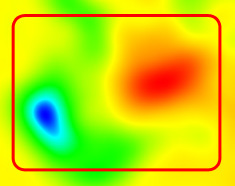
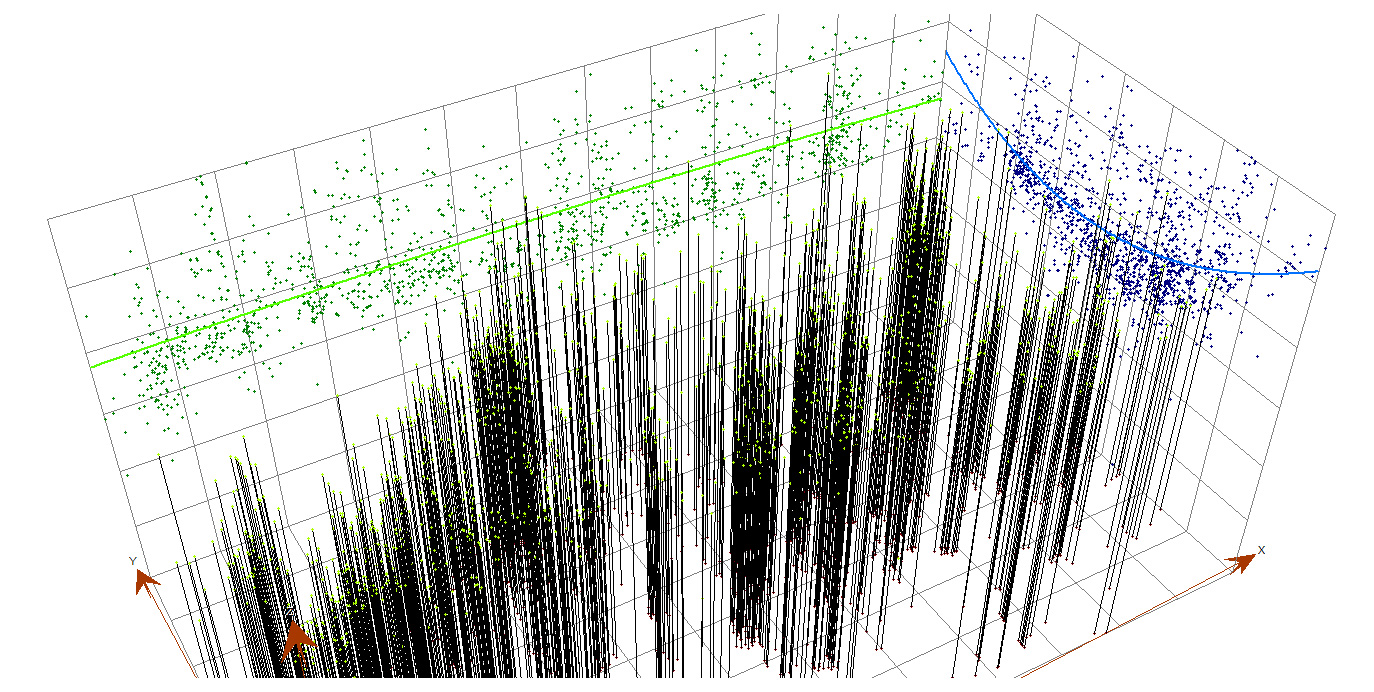
As you can see, the higher the values, the most likely to be in the North and the East of the country. This doesn’t mean we are not going to find high values in other CCAA, but this is the result of the trend.

What’s a Comunidad Autónoma? (the administrative level used for this report), You can read it here.

Let say for instance we want to focus on Reading Literacy. The highest values trend on being over the Northern and Eastern Comunidades Autonomas: Navarra, but we also find high values over La Rioja, Asturias, Euskadi or Aragón (they’re all in the North).

pisa-report-by-ccaa-20131210-02

The blue line shows how figures are increasing if we move to the North, likewise, if we look at the green line, higher values are in the eastern side of the Map.

pisa-report-by-ccaa-20131210

Also note how the lowest values fall over the Comunidades Autónomas located in the South and the West of Spain (I.e Andalucía and Extremadura).
It’s also important highlighting there are some outliers or regions with low values in the West (Murcia) or in the North but this is all about Trends!!! : -)

Source: WIKIPEDIA (http://es.wikipedia.org/wiki/Informe_PISA) and own elaboration
Software used: ArcGIS 10.0 /Geostatistical Analyst extension
20131220

geostatistical-analyst

I hope you guys find it interesting, please dont hesitate to ask if i can explain you any further.
Thank you for your time,

Alberto C.
MSc GIS

Analyse des emplacements réservés à la livraison sur voirie: NANTES

*Désole pour mon français, si vous voulez on peut parler en anglais ou espagnol.

La première chose qu’il faut faire c’est télécharger le jeu de données au site:
http://data.paysdelaloire.fr/donnees/
Thématique : Mobilité

Le jeu propose la géo-localisation des emplacements réservés à la livraison sur voirie dans un secteur limité de la ville de Nantes. Ces aires permettent l’enlèvement et la livraison de marchandises par les professionnels et facilitent le transport des marchandises en ville. 

L’idée c’est savoir s’il y a de concentration dans certains quartiers ou par contra on trouve un patron plus dispersé. Je vais commencer a visualiser les données y j’attends aussi la reponse de quelq’un au Forum avec le ‘shape’ des quartiers et pouvoir finir l’analyse.

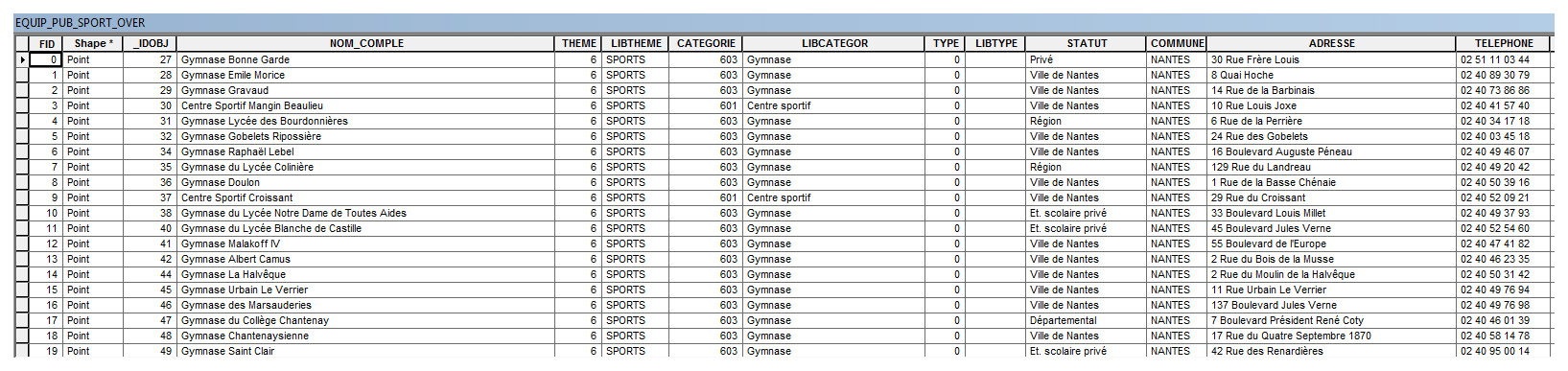
J’ai utilisé le logiciel ArcGIS 10.0. C’est facile ajouter les couches, dans ce cas ci, les points où on trouve des emplacements réservés à la livraison sur voirie… on ajoute aussi les images aériennes 20 cm (tout telechargé au meme endroit). Mon hypothèse aussi pondére la taille des emplacements réservés à la livraison.livraison_trend02

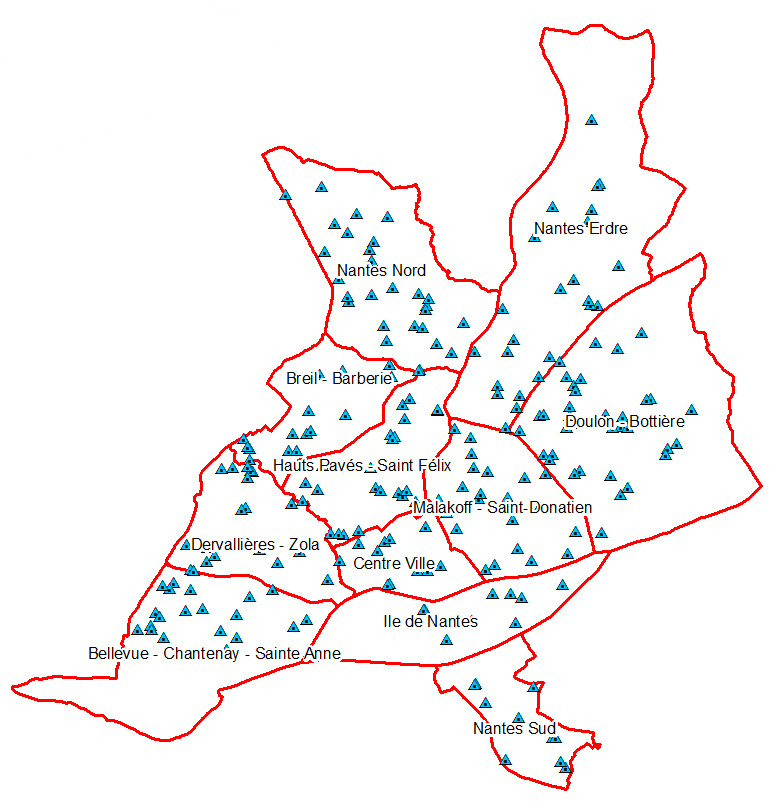
L’average nearest neighbor analyse va m’aider a savoir si on travail avec des point dispersés ou par contra concentrés spécifiquement dans certain quartiers. Pour l’instant je ne peux faire que en general parce je n’ai pas encore trouvé la couche pour les quartiers… Donc on peut dire qu’on a un scenario de dispersion.

Analyzing patterns/average nearest neighbor
livraison_trend04

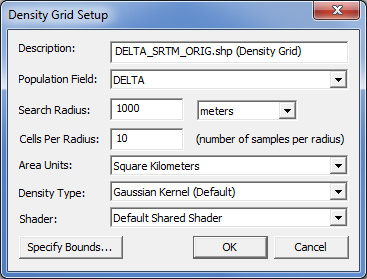
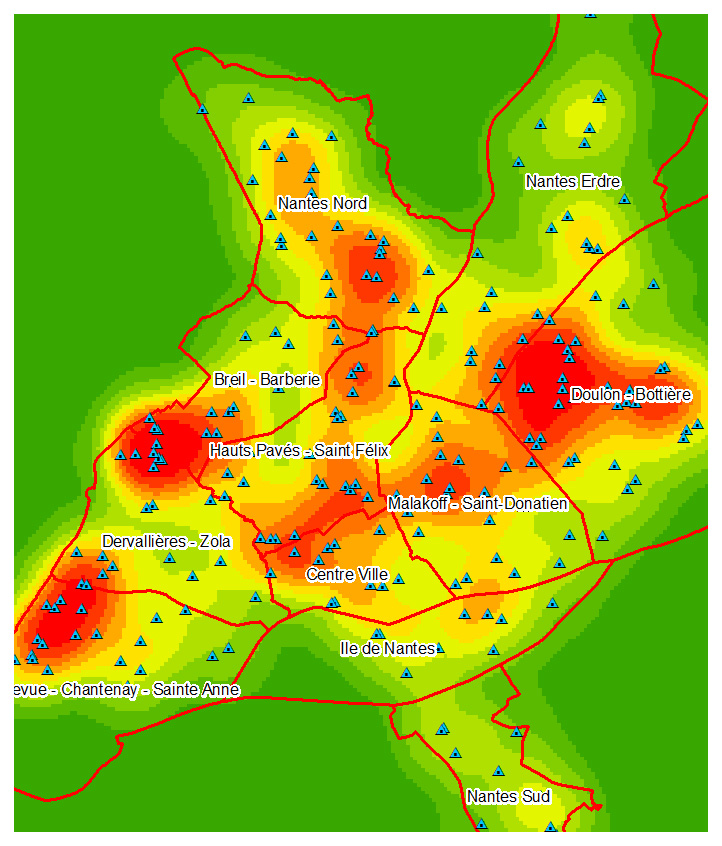
A travers d’un analyse de densité on peut visuellement voir si il y a un endroit avec des concentrations plus élevées.

Spatial analyst/density
livraison_trend03

A travers de l’auto-corrélation spatiale nous découvrons un niveaux de signifiance que nous fait douter du résultat de concentration précédent. Pour quoi ?. On vais voir après (j’espère).livraison_trend05
Et aussi nous pouvons voir qu’il n’y a pas de tendance Nord-Sud ou Est-Ouest dans le modèle de localisation.livraison_trend01

Alors ?. On continue bientôt.

Visualization will endure these difficult years of CRISIS!!

I have already worked as a building cleaner, data capture operator, copywriter, photographer, graphic designer, video editor, technical salesman… and seriously, I think i’m too old to make a living in something else now…

GIS has been working for me the last 8 years and i want to stay like this!!!:-) I have just read in GISLOUNGE that Visualization is among a list of a few things which will endure these difficult years of CRISIS.

http://www.gislounge.com/opinion-future-gis/

(…) Visualization
Look at the Foursquare time machine for example. The classic cartography is being challenged to new methods.
The market wants more beautifully visualized maps. (…)

And if the market needs more beautifully visualized maps, Alberto will be there!!!!.

london_cooldata

Cheers!!!!

Alberto
MSc GIS

Cool data. What is this?

cool-data

What is this ‘cool data‘ all about?. When i got my degree in Geography (about 15 years ago) it didn’t make sense at all being interested in something like graphic design, photography, video and all this stuff… but not only interested in my leisure time but also for taking advantage of it, getting a life out of it. When, after three years of working in a plane while taking aerial pictures i got fed up with anything related to Geography (and working 24/7) and started working as a website designer it started making a bit of sense… Only five years later, having worked as multimedia photographer, graphic designer and technical salesman everything got aligned and made all the sense in the world… i wanted to come back to Geography but taking advantage of all this years of doing something else…

It was time to resign and comeback to the university to get a MSc (In Remote Sensing and GIS)… leave everything behind and planning my working life again. After finishing my master’s degree (well, actually they were two!) i received a call from South Africa. Are you Alberto?. Hell yes, I am!. We have just received your CV and we are interested in offering you a job dealing with something (i didnt know about) called ‘Geovisualization’. Again, what is this all about?. Well, its dulcifying, easying up all complex information and offering it in a new way, a much easier way to understand it… This is what i call COOL DATA.

Let’s imagine there’s something our customer doesn’t really understand and its kind of difficult to describe using words… There’s always a way for making it easier. Using Graphic design tools or Video software to recreate a workflow or explain something complex… even adding some music, why not???.

cooldata01

Using Photoshop Macros and a few composition rules we can convert a tricky template in something we, our team and our customer will understand completely.  What about Global Mapper scripts for quick conversions between formats?.

cooldata02

What about including some statistics?

cooldata03

and Spatial analysis?.

cooldata04

And 3D?

cooldata05

Maybe some video?

Is this clear enough?. No?.
Let me explain it to you in English, French or Spanish.

Now, seriously, count on me in case of need of converting complex datasets into COOL DATA.
Please don’t hesitate to contact me.

Alberto C.
MSc GIS and Remote Sensing

Projets éoliens en Loire-Atlantique

C’est vraiment magnifique l’ouverture des données publiques… Je vais décrire mon itinéraire pour mieux comprendre:

  1. Télécharger des données (Projets éoliens en Loire-Atlantique)
  2. Telecharger DTM (SRTM v4)
  3. Faire Carte d’ombrage (ArcGIS),
  4. Orientations (ArcGIS) et
  5. Inclinations (ArcGIS) pour mieux comprendre l’emplacement des moulins
  6. Faire Carte de densité (en mesurent la puissance du parc)

eolicpark_03

Et maintenant la carte de densité en Global Mapper…

eolicpark_02

Name=Chauvé

Feature Type=Unknown Point Feature
Geometry=Point location: 321341.949 6688237.734 (Lat/Lon: 47° 11′ 11.0775″ N, 2° 00′ 13.7962″ W)
Map Name=projets_eoliens.shp
NOM_PARC=Chauvé
ETAT_AVANC=Permis de construire accepté
NBR_EOL=6
PUISSANCE=12

Et après, avec tous les cartes et toutes les données, faire l’interprétation, voici toutes les moulins du vent en Loire Atlantique, on peut apprécier la concentration au Nord/Nord-Est de la région:

eolicpark_01

Et aussi la rose des vents (http://www.nantes-erdre.fr/statistiques-du-vent-a-nantes):

La rose des vents représentative du secteur d’étude est celle fournie par la station de Nantes-Bouguenais.

Les données ont été recueillies sur une période de 29 années (entre le 1er janvier 1971 et le 31 décembre 2000).

La rose des vents ci-après représente la distribution annuelle des vents (tous mois et toutes heures
confondues).

Les vents sont classés selon trois catégories :
– vents dont la vitesse est comprise entre 5 et 16 km/h (bleu),
– vents dont la vitesse est comprise entre 16 et 29 km/h (vert),
– vents dont la vitesse est supérieure à 29 km/h (orange).

Ces catégories sont ensuite reportées en terme de fréquence pour chacune des 18 directions de la rose des vents située au centre (nord, sud, est, ouest, etc.)

Les vents dominants sont les suivants :

– Les vents de secteur ouest/sud-ouest et sud (directions de 180 à 280°) qui représentent 36,5% des vents, toutes vitesses confondues. Les vents les plus forts de la station (vitesse supérieure à 29 km/h) soufflent majoritairement dans ces secteurs.

– Les vents de secteur nord-est (24,7% des vents) avec une majorité de vents faibles ou moyens (directions de 20 à 80°).

frequence-vent
statistiques-vent0

image

Idéalement il faut exporté raster->vector et faire l’analyses spatiale mais ça va être un outre post !

Ici, quelques liens et information général:

L’energie eolique. http://www.loire-atlantique.fr/jcms/cg1_244375/l-eolien

Documentation: http://data.paysdelaloire.fr/donnees/detail/localisation-des-projets-eoliens/?tx_icsoddatastore_pi1[page]=4&visualization=3

Éolien terrestre ou off-shore, ce mode de production électrique devrait connaître une accélération sans précédent en Loire-Atlantique d’ici à 2020.

L’éolien apparaît comme la principale source d’énergie renouvelable électrique permettant d’atteindre dans les toutes prochaines années un niveau important de production.

C’est pourquoi Le Département a fixé en juin 2010 un objectif ambitieux de puissance éolienne installée à l’horizon 2020 :

  • 600 mégawatts (MW) terrestres
  • 500 MW en mer.

Team building when ‘in remote’

Almost three years now working in remote and every time more i realize how important team building is when you’re not working alongside the rest of the team, not joining annual meetings and when the number of visits to the HQ is reduced to the minimum expression…

First of all i wonder what can i do on my own and what can i suggest my boss to do now that working in remote starts being quite important for my employer, not just for myself but for several other members of the staff.

How do I build personal connections with team members you rarely or never see?  How do you keep from feeling isolated and build your professional brand with others when you don’t interact in person on a regular basis?  How can you strengthen the bonds of your team without getting uncomfortable?

Imagen

Any ideas are WELCOME!!!!!

Solar + Shadows analysis on Rue Massillon, Nantes (France)

This is the beautiful building in from of my house in Nantes… Let’s model it first using Sketchup. Also I have used a non standard style only for visualization purposes…

rue_massillon_02

If we have the North behind us this means we are going to have a lot of light… but so far we are just guessing…

rue_massillon_01

Now we know if for sure. Take a look at the results by M. Capeluto’s Solar Analysis.

rue_massillon_03

If we face South we notice there’s a lot of sun in the other side of the building (every line is a summarized path during a month, being the higher the closer to the summer solstice)

Please take a look at the video prepared by Tomasz Janiak, the developer of the tool.

Hope you guys find it interesting. Please let me know your thoughts.

Alberto C.

Shadow analysis en Puerta de Arganda, Madrid.

Hoy publico en español puesto que los datos son en español y yo soy español:-) but if you guys have any doubt dont hesitate to ask… even if you are french I will be around to answer you back “en français”, quand même !!!.

La idea era hacer un estudio de sombras de para mi propio uso pero extrapolable al uso para inmoliliarias. El modelado es como siempre usando sketchup y el plugin gracias a Tomasz Janiak:
http://tomaszjaniak.wordpress.com/category/plugin/

Como ejemplo elegí mi propia casa en una urbanización al sur este de Madrid, en Vicálvaro concretamente. Como veis, cuanto más mire al sur más posibilidades hay de que de el sol y por la misma regla de tres, una exposición norte conlleva menos horas de insolación (lo que no quiere decir que no haya sol, claro… y menos en Madrid). Aquí la urbanización a estudio.

shadow_analysis_puerta_arganda02

La propia configuración de la urbanización va a permitir que sea más o menos complicado que entre el sol por tu ventana, lo que quiero decir es que no es lo mismo una casa cuadrada independiente de dos pisos que una concatenación de bloques puesto que entre ellos también van a generar sombra, incluso obviamente hay que contar sobre todo en medio de la ciudad con edificios cercanos que puedan proyecta sombra sobre el nuestro y por supuesto otros artefactos tipo antenas o postes así como árboles. En este caso concreto esto no se ha tenido en cuenta para simplificar el análisis.

Por otro lado estudiamos el número de horas que da la sombra con cierta orientación (aproximadamente 245º)

shadow_analysis_puerta_arganda03

Y otra con aproximadamente 46º…

shadow_analysis_puerta_arganda01

También incorporo el uso de plugin Solar Analysis de Mr Capeluto que se ha tratado en un post anterior, lo que ayudará a tener una idea más clara de por dónde va el sol… como veis el norte está indicado y muestra cómo sale por el Este y se pone por el Oeste… este es un tema interesante a comprender bien, echad un vistazo a esta web de Microsiervos, por cierto interesante siempre:

http://www.microsiervos.com/archivo/curiosidades/por-donde-sale-realmente-el-sol.html

shadow_analysis_puerta_arganda_02

http://gcapeluto.technion.ac.il/SunTools/STdownload.html

Espero que os haya parecido interesante, y si queréis saber algo más ya sabéis: Preguntad!!

Alberto C.

On va nous déménager alors… Analyse solaire !

Ma copine et moi on va nous déménager très bientôt alors il faut faire une analyse solaire. Nantes, la ville ou on habite est connue dans le monde entier pour ses niveaux de pluie, n’importe que ce soit été, printemps… meme si France Météo a dit qu’il va faire BEAU… A Nantes ça ne marche pas comme ça. Il faut maximiser l’exposition pour garantir un montant minimum de lumière du soleil pendant l’année mais… comment faire?.

En rouge chez nous… on a pas encore trouvé notre nouvel appartement alors je vais faire l’analyse ici…

sun_tools_01

J’utilise Sketch-up pour modeler en 3D le bâtiment et Sun tools developé par Guedi Capeluto (Faculty of Architecture and Town Planning. Technion Israel Institute of Technology).

On peut voir quel parcour et a quel heure le soleil passe par là.  Chaque mois un peu plus haute (month 1, month 2, month 3…)

sun_tools_02

C’est très facile a comprendre et va beaucoup nous aider a trouver le trésor le plus important dans cette partie de la France: le SOLEIL !!!!!

http://gcapeluto.technion.ac.il/SunTools/STdownload.html

Plug-in Features:

  • SunPATH: visualization (month and year)
  • SunPOS: Sun Position for a date and time
  • SunVIEW: Axonometric views from the Sun
  • SunPENETRATION: Analyze Sun Penetration/Access in any specific analysis point.

J’espère que ça vous plait.

Alberto

P.S. Ouais, je sais, mon français c’est pas parfait mais j’essaie alors vous pouvez m’envoyer vôtres doutes en anglais et espagnol sans problème;-)