
Gracias a datos satelitales de alta calidad y herramientas de análisis geoespacial en la nube, es posible generar de forma ágil mapas de peligrosidad climática con respaldo científico y cobertura global. Un ejemplo de ello es el análisis de la frecuencia de lluvias extremas realizado para Sri Lanka en el periodo 2001–2023.
Monthly Archives: June 2025
Water Quality Assessment based on Sentinel-2 Surface Reflectance over La Safor region, Valencia, Spain. Winter 2024-25

in light of meteorological conditions in the study area — specifically the occurrence of exceptionally heavy rainfall events in the La Safor region of Valencia — rooted in hydrological and sediment dynamics rather than in sensor or algorithmic artifacts.
ELEVATION GAIN 84,448 m

On August 14th, 2014, I unknowingly took the first step of a long ascent. Nearly eleven years later, sharply 1089 runs later, I’ve reached an elevation gain of 84,448 metres — almost ten Everests. This isn’t the story of a single mountain climbed, but of a slow, deliberate series of efforts, some before dawn, raining cats and dogs, snowing, escaping from dogs, freezing like hell, others after long days, all contributing to a quiet accumulation of altitude and, more importantly, confidence.
Summer Heat Inequity in Madrid: A Playground-Based Analysis in Summer 2024

Between June 21 and September 21, 2024, I analyzed the surface temperatures of all 2,123 registered playgrounds in Madrid using Landsat 8/9 imagery (Level-2 Surface Temperature products). This investigation, an extension of my previous reflection on urban heat and environmental justice in Geovisualization.net (May 2025), highlights how thermal exposure is patterned by geography, planning legacies, and demographic vulnerability in the Spanish capital.
Urban delineation methods beyond administrative boundaries
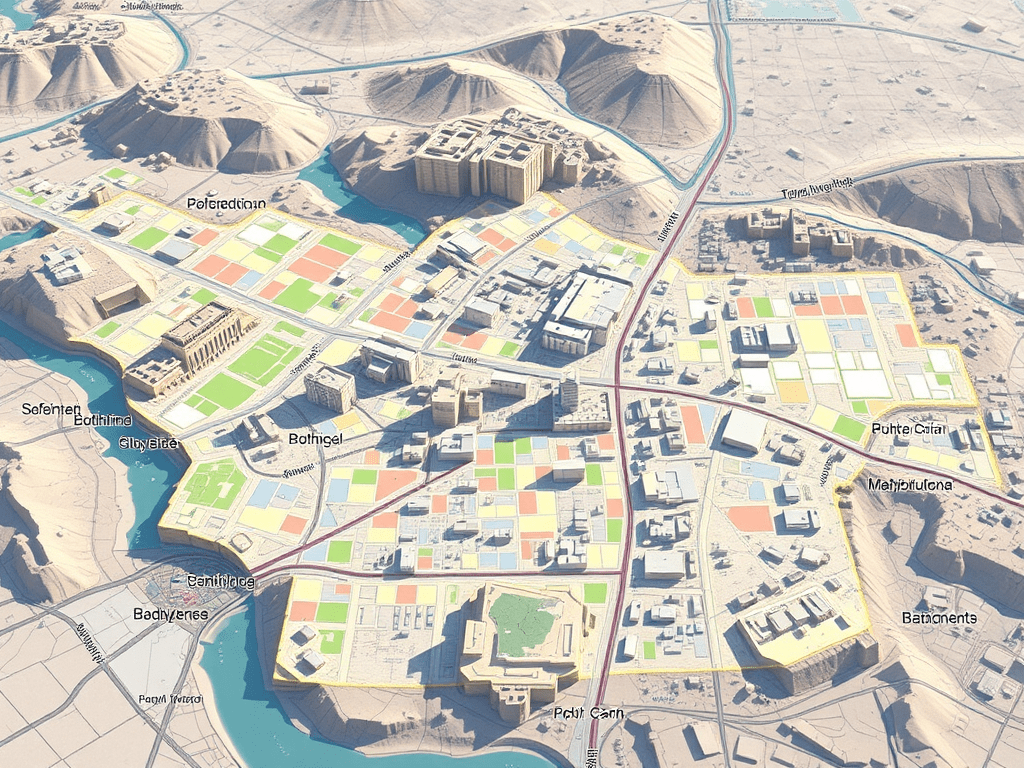
As a geographer working with Geographic Information Systems (GIS), I am particularly interested in exploring urban delineation methods that move beyond the constraints of administrative boundaries. Instead of relying on official municipal limits—which can often be outdated or misaligned with functional realities on the ground—I focus on delineating urban areas based on physical indicators such as built-up surface, population density, and spatial continuity. This approach allows for a more accurate and dynamic understanding of urban space.
 Geovisualization.net